COB fine pitch LED displays are changing how control rooms, studios, retail spaces, and premium lobbies present information. Their chip-on-board construction can create a smooth, close-viewing surface, with fewer visible gaps between light-emitting elements. But “fine pitch” alone does not guarantee a better screen. Brightness, processing, service access, color consistency, and viewing distance matter just as much.
The market is growing, though the figures need context. MarketsandMarkets’ LED Display Market report forecasts growth from about US$7.1 billion in 2024 to US$10.2 billion by 2029. That estimate covers the broader LED display market, not COB products alone. It signals investment, not proof that every COB model is suitable. A display in a sunlit storefront faces different demands from one viewed at arm’s length in a meeting room. Small details matter.
Display Supply Chain Consultants founder Ross Young is a recognized industry analyst, but a verified direct quotation from him about COB fine pitch LED is not available here. Rather than invent one, this guide uses a clearly labeled editorial takeaway: “Choose by viewing conditions and service needs, not pixel pitch alone.” It is a practical rule, not a verbatim expert quote. The following comparison examines seven options through measurable specifications and real installation priorities. Some trade-offs remain easy to overlook. A lower price can conceal harder maintenance, while a striking demo may not reveal long-term uniformity. The best choice depends on the room, the audience, and the support behind the screen.
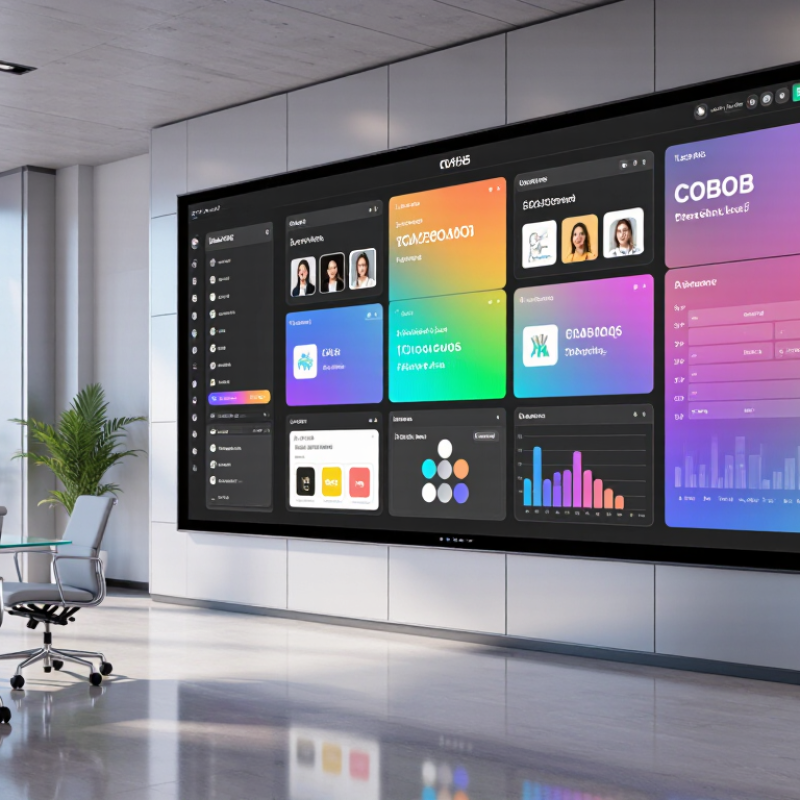
COB fine-pitch LED displays begin with tiny LED chips mounted directly onto a circuit board. The chips form red, green, and blue subpixels. A protective coating then covers the surface. Unlike displays built from separately packaged surface-mount LEDs, COB places the chips directly on the board. The result is a smoother, more continuous viewing surface.
Pixel pitch measures the distance between neighboring pixels, usually in millimeters. A smaller pitch packs more pixels into the same area, helping viewers see finer detail at close range. During operation, driver circuits control current to each pixel, while scanning electronics refresh image rows rapidly. It sounds simple. In practice, heat, calibration, and repair access all matter. A damaged chip beneath the coating may be harder to replace than an exposed component, so “protected” does not mean maintenance-free.
Grand View Research valued the global LED display market at about $7.5 billion in 2023 and projected an 8.4% compound annual growth rate from 2024 to 2030. That market-wide estimate is not a COB performance test, but it shows the broader sector’s scale. For buyers, viewing distance and room brightness should guide pitch selection more than headline resolution. I would also check service procedures before choosing a very fine pitch. That detail is easy to overlook.
What Are the 7 Best COB Fine-Pitch LED Displays?
Criteria for Evaluating the Best COB Fine-Pitch Displays
Judge a COB display by more than pixel pitch. Compare viewing distance, brightness in the actual room, grayscale detail, refresh rate, and color uniformity. Inspect small text and moving gradients from several seats. Look for visible seams or color shifts. COB packaging can protect the LED surface, but it does not guarantee easy repairs. Ask how individual modules are replaced and calibrated. MarketsandMarkets’ LED Display Market report projected growth from USD 7.1 billion in 2023 to USD 11.4 billion by 2028. That broad forecast signals market expansion, not product quality.
Also compare power use, heat management, calibration tools, warranty terms, and local service response. AVIXA’s 2024 Industry Outlook and Trends Analysis estimated the professional audiovisual industry at USD 325 billion in 2024, with growth projected through 2029. This reflects wider demand for AV systems; it is not a COB-specific performance benchmark. Request measured power and brightness figures, then verify them under comparable settings. A showroom demo may look impressive, yet hide uneven gray tones on a large wall.
Tip: View the screen from your closest expected seat. Bring a fine-text document and a dark-gradient test image. Ask for results at your intended brightness. Trade-offs remain. A tighter pitch can raise cost and power use.
Seven leading COB fine-pitch LED display options span pixel pitches from 0.6 mm to 2.5 mm. The right choice depends on viewing distance, room size, brightness, and installation access. COB packaging places LED chips directly on the circuit board, creating a smooth surface that can resist everyday contact better than exposed components. Small pixels matter. But they do not fix poor calibration or weak content.
Grand View Research valued the global LED display market at USD 7.6 billion in 2022 and forecast an 8.2% compound annual growth rate through 2030. That figure covers the broader LED display market, not COB fine-pitch products alone.
For practical comparison, consider a 0.6 mm option for close-viewing studios, 0.9 mm for control rooms, 1.2 mm for meeting spaces, 1.5 mm for broadcast walls, 1.8 mm for retail, 2.0 mm for corporate lobbies, and 2.5 mm for larger halls. Measure the room first. Check grayscale performance, refresh rate, service method, and power draw against the actual content. A bright showroom demo can hide uneven tones in dark scenes, so request calibrated footage and inspect it from the seats people will use.
COB fine-pitch displays are best compared by viewing distance, image detail, brightness, and maintenance needs—not by pixel pitch alone. Seven common options are 0.6, 0.7, 0.9, 1.2, 1.5, 1.8, and 2.0 mm. The 0.6 and 0.7 mm models can show crisp text at close range, but usually cost more and demand careful installation. Pitches around 0.9 to 1.2 mm suit control rooms and premium meeting spaces. The 1.5 to 2.0 mm options often make more sense for larger rooms, where viewers sit farther away. Smaller is not always better.
Compare refresh rate, grayscale handling, brightness, color consistency, and front-service access across all seven. These details affect camera performance, dark-scene clarity, and repair time. COB packaging can protect the LED surface, though durability and image quality vary by design. Ask for measured specifications and a live demonstration; a showroom image may hide uneven color or visible seams. One caveat: “best” depends on the room, and a pitch comparison alone leaves out important costs.
Tips: Measure the nearest viewing distance before choosing. Check the demo. View moving content and fine text from your actual seating position, then confirm power use, spare-module availability, and service procedures. Tiny pixels cost more. Don’t overlook installation tolerances.
Pixel density rises as pixel pitch gets smaller. The values below are calculated from each pitch, assuming a square pixel layout; they compare pitch options, not specific products or brands.
Choosing the right COB fine-pitch LED display starts with the room, not the product specification sheet. Measure the distance from the screen to the nearest viewer, then compare candidate pixel pitches from actual seating positions.
A rough planning guide is about one metre of viewing distance per millimetre of pixel pitch, but content and eyesight can change the result. Test real text and video. Small text reveals problems quickly.
COB packages cover LED chips with a protective layer, which can help resist surface impacts and simplify routine cleaning. Still, no display is damage-proof, and repair methods vary by design. Check module replacement procedures, spare-part availability, ventilation, brightness control, and access behind the screen before choosing.
AVIXA’s 2024 Industry Outlook and Trends Analysis projects global professional audiovisual industry revenue will reach $325 billion by 2028. That growth makes careful system planning more important, not less.
I would not choose the finest pitch by default; it can add cost without improving the view from the back row. A full-scale viewing test is worth the effort.
The awkward detail? Room lighting changes throughout the day, so one showroom demonstration may not represent everyday use.
Copyright © 2021 Payless Pet Products - All Rights Reserved.