What Are the Best Hotel Room Furniture Sets?
A guest notices the bed before the desk, but both shape the first impression. A well-chosen Hotel Room Furniture Set should look cohesive, feel comfortable, and withstand frequent use. That balance matters in a competitive market. J.D. Power’s 2024 North America Hotel Guest Satisfaction Index Study reported an overall satisfaction score of 701 out of 1,000, up 12 points from 2023. The figure does not prove that furniture alone drives satisfaction. It does show why operators should take the room experience seriously.
Operating conditions matter, too. STR’s 2024 U.S. hotel performance figures put average occupancy at about 63 percent, meaning room furnishings face regular turnover and wear. Think of a sturdy nightstand with a wipeable surface, a supportive desk chair, and drawers that open quietly. Those details can matter more in daily use than a dramatic lobby-style finish. Small details matter. The best set depends on the property’s guests, room size, budget, and maintenance capacity. A boutique inn may favor warm wood and distinct character; a business hotel may prioritize work surfaces and easy-to-clean upholstery. There is no universal winner. And polished product photos can hide weak joints or difficult repairs. This guide compares the features, materials, and layouts that help identify furniture sets suited to different hotel needs, while noting where trade-offs remain.
What Defines a Hotel Room Furniture Set?
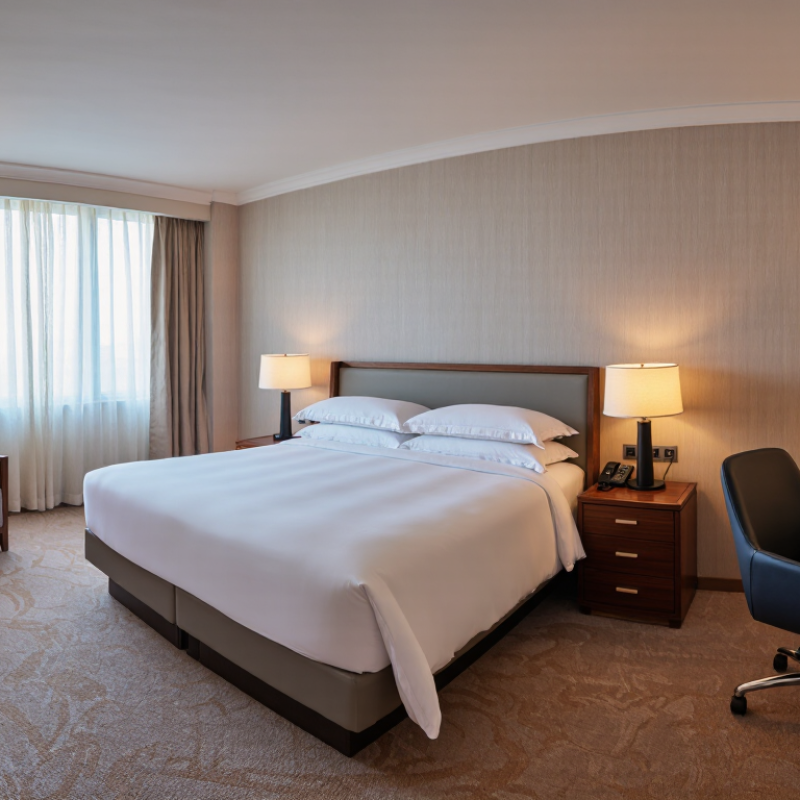
A hotel room furniture set is a coordinated group of pieces designed to make one room practical, comfortable, and visually coherent. It usually includes a bed frame and headboard, bedside tables, a desk or work surface, a chair, and storage such as a wardrobe or luggage bench. The pieces need not match exactly. Shared finishes, proportions, and materials can create unity without making the room feel like a showroom. That matters daily. Guests need clear paths from the bed to the bathroom, reachable outlets, and a place to open a suitcase without blocking the door.
A useful set also considers upkeep and repeated use. AHLA’s 2024 State of the American Hotel Industry report projected U.S. hotel occupancy at 63.6%. That forecast offers operating context: chair joints, drawer runners, and bed edges face regular handling. Choose sturdy construction, repairable components, and surfaces that housekeeping staff can clean efficiently. A matching set can still feel too staged; an oversized desk or sharp-edged bench may undermine comfort. Measure the room, test drawer access, and check that furniture leaves space for luggage and movement. No single layout fits every property.
What Are the Best Hotel Room Furniture Sets? — What Defines a Hotel Room Furniture Set?
| Set Type | Typical Pieces | Best Suited For | Typical Furniture Dimensions | What Makes It a Strong Choice |
|---|---|---|---|---|
| Essential Guest-Room Set | Bed and headboard, one or two bedside tables, dresser or wardrobe, and luggage rack or bench. | Compact rooms, limited-service hotels, and rooms designed for short stays. | Queen mattress: 60 × 80 in (152 × 203 cm). Bedside table: about 18–24 in wide (46–61 cm). Luggage rack: about 24–36 in wide (61–91 cm). | Provides the main sleeping, storage, and luggage functions while keeping the room uncluttered. |
| Work-Ready Set | Bed and headboard, bedside tables, desk, task chair, dresser or closet storage, and luggage bench. | Business hotels and rooms where guests may work at a desk. | Desk: commonly about 42–60 in wide and 20–30 in deep (107–152 × 51–76 cm). Desk height is often around 29–30 in (74–76 cm). | Pairs sleeping and storage pieces with a usable work surface and a chair that fits the desk. |
| Comfort-Focused Set | Bed and headboard, bedside tables, dresser, lounge chair or small sofa, and side table. | Larger guest rooms, extended stays, and rooms with space for a separate seating area. | Lounge chair: commonly about 28–36 in wide (71–91 cm). Small sofa: often about 60–80 in wide (152–203 cm). | Creates a place to sit apart from the bed. Check that seating and table placement leave clear walking routes. |
| Extended-Stay Set | Bed and headboard, bedside tables, wardrobe or closet, dresser, desk or dining table, chairs, and luggage storage. | Suites and rooms intended for longer visits. | Dining table for two: commonly about 30–36 in across (76–91 cm). Wardrobe depth: often about 22–24 in (56–61 cm). | Offers more clothing storage and a practical surface for meals or work without relying solely on the bed. |
| Accessible-Room Set | Bed and headboard, accessible bedside storage, reachable closet or storage features, desk or table, and seating selected for clear circulation. | Guest rooms designed to meet applicable accessibility requirements. | Dimensions and clearances depend on local regulations and the room layout. For example, U.S. ADA standards specify a 30 × 48 in (760 × 1220 mm) clear floor space at accessible elements in applicable situations. | Furniture placement must preserve required clear floor space and accessible routes. Confirm the applicable accessibility rules rather than relying on a generic furniture-size guide. |
| Durable, Easy-Care Set | Commercial-use bed frame and headboard, bedside tables, dresser, desk, and luggage bench with cleanable surfaces. | High-occupancy properties where routine cleaning and maintenance are important. | Use dimensions that suit the room plan; verify overall width, depth, height, and clearance for drawers, doors, and housekeeping access before ordering. | Prioritizes stable construction, repairable components, and finishes suited to the property’s cleaning procedures and expected use. |
What defines a hotel room furniture set? It is a coordinated group of furnishings that supports sleeping, storage, and—depending on the room—work, seating, or dining. The best set is the one that fits the room layout and guest needs, allows practical circulation and cleaning, and meets applicable safety and accessibility requirements. Dimensions shown are typical examples, not universal specifications; actual sizes vary by design and manufacturer.