What Is the Best Skin Analysis Machine in 2026? The answer depends on evidence, workflow, and client expectations. A premium appearance does not guarantee accurate analysis. In a clinic, the device should capture repeatable images, control lighting, measure visible concerns, and produce understandable reports. Skin tone matters too. Uneven illumination can make pigmentation appear stronger than it is.
Market signals show why this category is expanding. Grand View Research reports continued growth in the global skin care devices market, driven by imaging, personalization, and non-invasive technologies. Fortune Business Insights also identifies artificial intelligence as a major influence across the broader beauty-device industry. Meanwhile, the U.S. FDA’s public AI-enabled medical device list demonstrates the rapid adoption of software-assisted analysis, although most listed systems are not consumer skin scanners. Growth is not proof of accuracy.
A reliable Skin Analysis Machine should therefore be judged through practical testing. Compare images from the same face, under identical lighting, before trusting small changes. Check camera resolution, polarized or multispectral imaging, software updates, data security, training, and service support. Ask whether the system measures hydration, pores, texture, redness, wrinkles, and pigmentation separately. Ask for validation data, not attractive screenshots. ISO 13485 certification may support manufacturing quality, but it does not automatically prove clinical performance. This distinction is easy to miss. Even experienced operators can overinterpret a colorful skin map. The best choice in 2026 may not be the most expensive machine. It may be the one that delivers consistent results, clear limitations, and useful decisions during real consultations. That is a less glamorous answer, but probably the safer one.
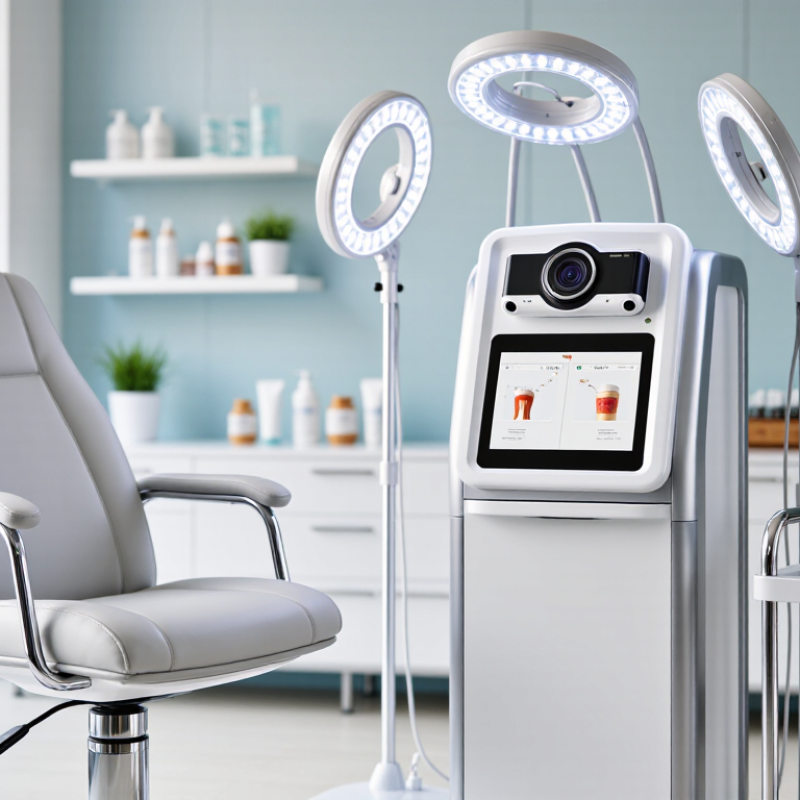
A skin analysis machine uses controlled lighting, cameras, and imaging software to examine visible skin conditions. It may measure hydration, oiliness, pores, wrinkles, redness, pigmentation, and texture. Some systems use polarized or ultraviolet light to reveal surface patterns that normal lighting can hide. The process usually takes less than a minute. A client removes makeup, rests their face inside the imaging area, and follows simple positioning instructions. The software then compares captured images with reference data and creates a report. It does not replace a dermatologist’s examination or provide a medical diagnosis.
The best skin analysis machine should produce consistent images, clear reports, and understandable measurements. Accuracy depends on calibration, lighting, camera quality, and operator training. In practice, even small changes in room brightness can affect results. No scan is perfectly objective. A professional should review the images, ask about skincare habits, and consider allergies, medication, age, and recent sun exposure. Reliable systems should also protect facial data through secure storage and clear consent procedures. A detailed screen alone does not prove scientific quality.
Tips: Cleanse the face before scanning, but avoid harsh exfoliation that day. Remove makeup, sunscreen, and heavy creams. Use the same lighting and positioning during follow-up scans. Compare progress over several weeks, not after one treatment. Ask how the machine was tested and whether its findings support professional evaluation. Some reports look impressive but remain difficult to interpret without trained guidance.
The best skin analysis machine in 2026 should deliver consistent images, not impressive pictures alone. Standardized lighting is essential because sunlight, room color, and camera distance can change results.
Cross-polarized and ultraviolet imaging may reveal redness, surface oil, pigmentation patterns, and hidden sun exposure. These features help trained professionals compare skin changes over time.
Accuracy depends on more than sensors. A reliable system should use regular calibration, clear measurement scales, and repeatable testing procedures.
It should assess hydration, pores, fine lines, texture, and uneven tone without presenting uncertain results as medical facts. A machine is not a diagnosis.
Professional interpretation remains necessary, especially when unusual marks appear.
Practical design matters too. Fast scanning, hygienic contact surfaces, and simple software improve daily consultations.
Secure data storage and clear consent settings support responsible use. Artificial intelligence can organize images and identify patterns, but its suggestions require human review.
No device is flawless. Skin thickness, recent exercise, cosmetics, and indoor heating can affect readings.
I would test the same person under identical conditions before trusting a trend.
A polished interface may look authoritative, yet transparent limitations often reveal stronger engineering.
The best skin analysis machine in 2026 depends on measurable performance, not the brightest screen. Leading systems usually combine polarized lighting, multispectral imaging, and facial mapping. Each method reveals different details, from surface redness to uneven pigmentation and fine lines.
The 2024 Global Wellness Institute report valued the global wellness economy at 6.3 trillion dollars in 2023. McKinsey’s 2024 Future of Wellness survey also found that 82% of United States consumers view wellness as a major priority. These figures support growing demand for evidence-based skin consultations. However, market growth does not prove clinical superiority. A strong machine should show repeatable images, stable calibration, clear scoring logic, and documented validation. It should also protect facial data. I would not trust an attractive report without test-retest results or trained operator oversight. Human skin changes daily. Lighting, hydration, and recent product use can distort readings.
Tips: Compare the same face under identical lighting. Ask whether the device measures skin depth or only surface appearance. Check image resolution, calibration intervals, data storage policies, and staff training. A cheaper scanner may suit basic consultations, while a multispectral system offers deeper analysis. Yet more features can create more confusion. The best choice is the machine that produces consistent, explainable results in your actual clinic, not merely impressive demonstrations.
A practical comparison of the main skin-analysis technologies used in professional clinics, dermatology practices, spas, and aesthetic consultations.
| Machine Type | Primary Measurement Method | Typical Skin Concerns Detected | Image or Data Output | Best Use Case | Main Strength | Key Limitation | Overall Practical Value |
|---|---|---|---|---|---|---|---|
| Standardized Polarized-Light Imaging | Visible-light photography combined with cross-polarized or parallel-polarized illumination to reduce surface reflection and emphasize contrast. | Visible redness, uneven tone, pores, wrinkles, surface texture, and some pigmentation patterns. | High-resolution facial images, side-by-side comparisons, and visual treatment records. | Routine consultations, progress tracking, and patient education. | Fast, non-invasive, easy to understand, and generally affordable. | Results depend strongly on lighting, camera distance, skin preparation, and image standardization. | High |
| Multispectral Imaging | Captures images under several controlled wavelengths, commonly including visible and near-infrared bands. | Surface pigmentation, redness, vascular appearance, photodamage patterns, and some subsurface contrast. | Color-coded maps, index values, trend reports, and multi-wavelength images. | Clinics requiring more structured comparison than ordinary photography can provide. | Combines visual documentation with quantitative or semi-quantitative analysis. | Wavelength selection, software algorithms, and device calibration can affect interpretation; it is not a direct diagnosis of every skin lesion. | Very High |
| UV or Fluorescence Imaging | Uses ultraviolet excitation or specialized illumination to reveal fluorescence and contrast not normally visible under white light. | Surface oil distribution, follicular debris, some pigment contrast, and selected microbial or porphyrin-related fluorescence patterns. | UV contrast images and problem-area maps. | Oiliness education, acne consultations, and explaining cleansing or skincare needs. | Shows certain surface patterns that may be difficult to see in ordinary photographs. | Fluorescence is not specific enough to confirm a diagnosis; results can be influenced by cosmetics, sunscreen, and recent cleansing. | Medium-High |
| 3D Facial Surface Scanning | Uses structured light, stereo imaging, or depth sensing to reconstruct the external facial surface. | Facial contours, asymmetry, volume distribution, folds, and surface topography. | Three-dimensional models, depth maps, contour measurements, and before-and-after overlays. | Injectable planning, facial contour assessment, and treatment outcome documentation. | Provides measurable geometry rather than only two-dimensional color information. | Primarily measures external shape; it does not directly measure hydration, cellular activity, or most subsurface pigment changes. | High for 3D needs |
| Polarized and Cross-Polarized Combination Imaging | Alternates between lighting conditions that emphasize surface reflection and conditions that suppress glare. | Texture, fine lines, pores, redness, and visible pigmentation differences. | Multiple synchronized facial images for visual comparison and documentation. | General-purpose skin consultations where usability and repeatability are priorities. | Offers a useful balance between image clarity, consultation speed, and cost. | Quantitative scores may not be directly comparable between different systems or software platforms. | Very High |
| AI-Assisted Image Analysis | Software analyzes standardized photographs using trained image-recognition models and predefined scoring rules. | Commonly assessed features include wrinkles, pores, spots, redness, texture, and overall evenness. | Automated scores, heat maps, ranked concerns, and personalized consultation reports. | High-volume consultations, consistent reporting, and treatment follow-up. | Improves workflow efficiency and creates repeatable reports when imaging conditions are controlled. | AI output is an estimate, not a medical diagnosis; accuracy may vary with skin tone, lighting, image quality, and training data. | High with validation |
| Hydration, Sebum, and Biophysical Probe Systems | Uses contact or non-contact sensors to estimate selected properties such as electrical capacitance, sebum level, or transepidermal water loss. | Dryness, surface oiliness, barrier-related changes, and short-term product or treatment effects. | Numerical readings, reference ranges, and repeated measurement records. | Skincare formulation guidance, research settings, and controlled treatment monitoring. | Provides direct numeric measurements for specific physiological variables. | Usually evaluates limited skin parameters rather than the whole face; contact pressure, temperature, humidity, and product residue can affect readings. | High for targeted testing |
The best skin analysis machine depends on your daily work, not its appearance or price. A busy clinic may need fast imaging, clear reports, and simple staff training. A smaller studio may value portability and lower maintenance costs. Define your purpose before comparing features. Are you tracking hydration, pigmentation, pores, redness, or texture? Choose measurements that support real consultations.
Look for consistent lighting, multiple imaging modes, and repeatable results. A reliable device should show the same skin area similarly during follow-up visits. Ask how often calibration is required. Check whether the software explains results in plain language. Clients should understand a visible image, not face a confusing technical chart. Independent testing or published validation adds credibility, although impressive numbers need careful review.
Data protection also matters. Confirm where images are stored, who can access them, and how long records remain available. The device should fit your workflow, including consultation time and cleaning routines. A beautiful interface cannot repair inaccurate readings. Nor can expensive hardware replace trained interpretation.
No machine is perfect.
Skin changes with light, temperature, cosmetics, and camera position. I would test several devices on different skin tones before purchasing. I would also compare results with professional observation, rather than trusting every score. That extra step may feel slow, but it can reveal weaknesses hidden during a polished demonstration. A practical trial, transparent support policy, and realistic budget often matter more than a long feature list.
What Is the Best Skin Analysis Machine in 2026?
The best skin analysis machine is not always the one with the highest resolution. It should produce repeatable images, explain its measurements, and support trained professionals. Current systems can estimate pores, pigmentation, redness, wrinkles, and moisture. However, lighting, camera distance, makeup, and skin tone can change results. A machine may label visible redness accurately, yet miss allergy, infection, or deeper inflammation. That gap matters. Skin analysis supports assessment; it does not replace clinical diagnosis.
Grand View Research estimated the global artificial intelligence in healthcare market at 19.3 billion dollars in 2023, with strong growth expected through 2030. McKinsey’s 2024 Global Survey also reported that 72% of organizations use AI in at least one business function. These figures suggest faster adoption, not automatic reliability. The World Health Organization stresses transparency, human oversight, privacy, and fairness in health AI. Future systems may combine facial imaging, dermoscopy, patient history, and long-term tracking. Better calibration across different skin tones is essential. I still see one weakness: many systems show a score without explaining its uncertainty.
Tips: Use the same lighting and camera distance every time. Remove heavy makeup before scanning. Compare trends across visits, not one dramatic score. Ask whether the device has independent validation, privacy safeguards, and performance data for diverse skin types. Calibration should be checked regularly, because small errors can become misleading treatment advice.
Copyright © 2021 Payless Pet Products - All Rights Reserved.