7 Best UAV Camera Modules for Commercial Drones?
Commercial drones are becoming practical tools for surveying, infrastructure inspection, agriculture, and emergency mapping. The FAA’s 2024 Aerospace Forecast expects continued growth in the United States commercial small-UAS fleet through 2044. Drone Industry Insights also identifies inspection, mapping, and delivery as major commercial drone applications. These trends increase demand for reliable imaging, not simply higher megapixel counts.
This guide examines seven Uav Camera Module options for commercial platforms. The evaluation considers sensor size, global-shutter performance, dynamic range, low-light output, thermal capability, weight, stabilization, and software integration. A camera that captures sharp roof defects may still perform poorly over reflective water or moving machinery. Small details matter. Lens distortion, vibration, and heat can quietly damage useful data.
Professional buyers should also review the module’s SDK, calibration process, operating temperature, ingress protection, and long-term supply support. MarketsandMarkets has repeatedly identified payload capability and sensor integration as important drivers in the commercial drone market. However, market forecasts differ by methodology, region, and application. That uncertainty deserves attention. A specification sheet can look impressive while hiding rolling-shutter artifacts or weak edge performance. This comparison therefore avoids treating one feature as universally superior. The best choice depends on the aircraft, mission duration, flight speed, and processing workflow. Some conclusions remain judgment-based, because real-world performance changes with weather, mounting design, and operator skill. Readers should verify current pricing and compatibility before deployment. The seven modules below offer a practical starting point for that review.
What Makes a UAV Camera Module Suitable for Commercial Drones?
What makes a UAV camera module suitable for commercial drones? The answer is not simply higher resolution. MarketsandMarkets’ 2024 UAV Market report projects growth from USD 35.3 billion in 2024 to USD 58.4 billion by 2029. This expansion increases demand for dependable imaging in mapping, inspection, agriculture, and public safety.
A suitable module must match the mission. A global shutter reduces image distortion during fast flight and supports accurate mapping. High dynamic range preserves roof details beside bright skies. Low-light performance matters around bridges, turbines, and warehouses. Stabilization should keep frames steady when wind shakes the aircraft. Weight and power consumption also require careful testing. Every extra gram reduces useful flight time.
Reliability matters more than impressive specifications. The module should provide predictable thermal behavior, sealed construction, and repeatable calibration. It also needs clear data interfaces and software support for flight-control integration. The 2024 Drone Industry Insights market analysis identifies inspection, mapping, and agriculture as important commercial drone segments, each requiring different image outputs. A surveying team may need geometric accuracy, while an agricultural operator may value multispectral consistency. One camera rarely does everything well.
Field experience exposes weaknesses that laboratory charts miss. Condensation, vibration, and dirty lenses can quietly ruin valuable data. Engineers should test complete payloads, not isolated sensors. Even then, the selection process remains imperfect. A lighter module may sacrifice detail, while a sharper sensor may create heavier processing demands. Real missions should decide the final balance.
Key Features to Compare in Professional UAV Camera Modules
When comparing professional UAV camera modules, start with the sensor rather than the advertised pixel count. A larger sensor usually captures cleaner images in shaded streets, crop rows, and changing daylight. Dynamic range matters too. It preserves both bright rooftops and dark ground details in one frame. For inspection work, accurate color rendering can be more valuable than extreme resolution.
Stabilization deserves close testing. A three-axis gimbal can keep building edges steady during wind, but only when its motors match the aircraft’s payload limits. Check autofocus speed, manual focus control, and image delay before choosing a module. Small delays can distort mapping lines or reduce inspection accuracy. Thermal imaging adds value for electrical surveys, yet its temperature readings depend on calibration, distance, and surface conditions. Do not treat every heat-colored image as proof of a fault.
Integration details often decide long-term reliability. Compare power consumption, mounting dimensions, data interfaces, storage options, and compatibility with the flight controller. Weather sealing helps during mist, but it does not replace sensible operating limits. A clear maintenance process should include lens cleaning, firmware checks, sensor calibration, and sample image reviews. A common testing mistake is judging cameras only in bright weather. I once underestimated low-light noise during indoor inspections. That weakness became obvious later. Test the module at dawn, under glare, and during slow turns. Real conditions are less forgiving.
7 Best UAV Camera Modules for Commercial Drones
Key features to compare in professional UAV camera modules
This comparison uses representative specifications for common professional UAV camera module classes. Higher resolution supports mapping and inspection detail, while higher frame rates improve motion capture. Sensor size, global or rolling shutter, thermal sensitivity, dynamic range, stabilization, and payload weight should also be evaluated before selection.
Seven Leading UAV Camera Modules for Commercial Drone Operations
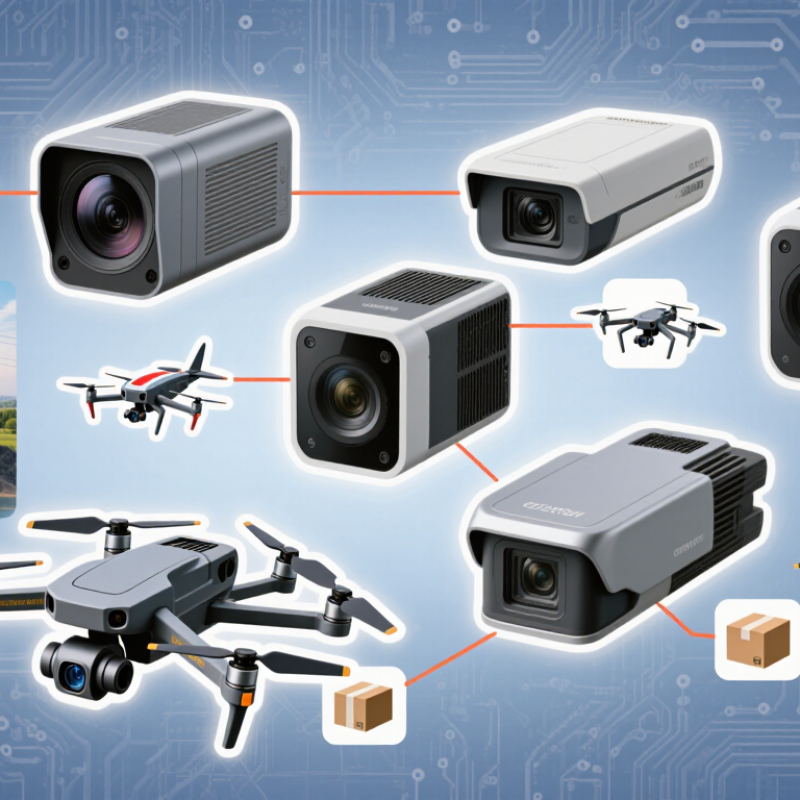
Seven leading UAV camera modules serve different commercial drone operations, and the best choice depends on the inspection task. A high-resolution daylight module captures sharp roofs, bridges, solar panels, and construction details. A low-light module supports dawn, dusk, and indoor surveys where ordinary sensors lose useful contrast. It helps, but shadows still create uncertain readings.
Thermal modules reveal heat differences in electrical equipment, buildings, and industrial systems. Multispectral modules measure vegetation stress through several narrow light bands. These readings require careful calibration and knowledgeable interpretation. A zoom module allows operators to inspect distant structures without flying closer. That reduces disturbance and improves site safety. Optical zoom alone cannot replace stable flight control.
Mapping modules combine high-detail imagery with accurate positioning for terrain models and progress surveys. Stereo depth modules estimate distance, supporting volumetric measurements and controlled navigation around structures. In field work, lens quality, gimbal stability, image format, and sensor synchronization matter as much as resolution. I have seen impressive specifications produce weak results after vibration, glare, or poor exposure settings. Weather sealing and reliable data storage also deserve attention. Operators should test each module under real lighting, wind, and temperature conditions before adopting it for recurring projects. A technically advanced camera may still be the wrong tool.
How to Match a Camera Module with Different Drone Applications
7 Best UAV Camera Modules for Commercial Drones?
How to Match a Camera Module with Different Drone Applications
Choosing a UAV camera module starts with the job, not the highest pixel count. For mapping construction sites, select a global-shutter RGB module with reliable geometric calibration. It reduces distorted images during fast flight. Agricultural surveys often need multispectral sensors with narrow, consistent wavelength bands. A thermal module suits roof inspections, electrical checks, and nighttime equipment monitoring. Thermal contrast matters more than image sharpness here. Always compare sensor weight, power draw, lens angle, and storage needs with the aircraft’s payload limits.
Different work requires different optics. Wildlife observation and infrastructure inspection benefit from optical zoom, especially when the drone must remain distant. Low-light modules help during dawn surveys, but they can produce visible noise. Stabilized cameras improve bridge and façade inspections in moderate wind. For detailed corridor mapping, a high-resolution module with a suitable focal length may outperform a wider lens. Wide lenses capture more ground, yet they can weaken edge detail. Test both in the actual environment.
In field trials, I check image overlap, motion blur, heat buildup, and connector reliability. A camera may perform well indoors but struggle under bright reflections or dust. That difference is easy to underestimate. Confirm calibration procedures before purchase. Review sample files, not only specification sheets. No module is perfect. Sometimes a lighter camera with fewer features produces cleaner, safer flights. The right match depends on useful data, stable operation, and repeatable results.