Payless Pet Products

Payless Pet ProductsPayless Pet ProductsPayless Pet ProductsPayless Pet Products
  • Home
  • New Website
  • Fish Amoxi Forte 500mg
  • Fish Aug 625mg
  • Fish Cipro Forte
  • Fish Clinda Forte
  • Fish Doxy
  • Fish Fluco Forte
  • Fish Itra
  • Fish Keto
  • Fish Levo 500mg
  • Fish Zithro 250mg
  • Fish Zithro 500mg
  • Fish Zithro 1000mg

Payless Pet Products

Payless Pet ProductsPayless Pet ProductsPayless Pet Products
  • Home
  • New Website
  • Fish Amoxi Forte 500mg
  • Fish Aug 625mg
  • Fish Cipro Forte
  • Fish Clinda Forte
  • Fish Doxy
  • Fish Fluco Forte
  • Fish Itra
  • Fish Keto
  • Fish Levo 500mg
  • Fish Zithro 250mg
  • Fish Zithro 500mg
  • Fish Zithro 1000mg
10 Best Wall Mounted Batteries for Home Energy Storage

10 Best Wall Mounted Batteries for Home Energy Storage

A home battery can turn midday solar production into evening power, when lights, cooking, and heating compete for electricity. A wall mounted battery also keeps floor space clear, but its appearance is only one part of a sound buying decision. Capacity, usable energy, continuous output, chemistry, warranty terms, and inverter compatibility deserve closer inspection. Small print matters.

The International Energy Agency’s Batteries and Secure Energy Transitions report says battery storage capacity must grow sixfold by 2030 in its net-zero pathway. That is a global scenario, not a promise that every household needs storage. The U.S. National Renewable Energy Laboratory’s Storage Futures Study likewise examines storage’s changing role across the power system. For homeowners, the practical question is more specific: can a unit support essential circuits, match local solar output, and fit the home’s electrical setup? It depends.

This guide compares 10 wall-mounted options for home energy storage, focusing on specifications that can be checked against manufacturer documentation. We consider usable capacity, power rating, chemistry, monitoring, warranty coverage, and installation needs. A headline capacity figure can mislead if usable energy is lower or backup output cannot start a large appliance. And a strong warranty is not the same as a simple claim process. Product availability and installer support also vary by location. Treat this shortlist as a starting point, then verify current specifications and get a qualified assessment of your home’s loads. That extra check may feel tedious. It can prevent an expensive mismatch.

10 Best Wall Mounted Batteries for Home Energy Storage
Table of Contents [Hide]
1 How Wall-Mounted Batteries Store and Supply Home Energy
2 Features That Matter When Comparing Residential Battery Systems
3 Ten Wall-Mounted Batteries for Home Energy Storage
4 Comparing Battery Capacity, Power, Compatibility, and Warranty
5 Matching a Battery System to Household Energy Needs

How Wall-Mounted Batteries Store and Supply Home Energy

A wall-mounted battery stores electricity as chemical energy, then releases it as direct current when the house needs power. A battery management system monitors cell voltage and temperature, while an inverter changes the stored electricity into household alternating current. If solar panels are connected, surplus daytime power can charge the battery; after sunset, it can supply selected circuits or, if configured, more of the home. The exact arrangement depends on the inverter and electrical setup. A tidy wall unit still needs careful installation.

Energy is lost during charging and conversion. NREL’s 2024 Annual Technology Baseline uses 85% round-trip efficiency for utility-scale battery storage; that is a useful benchmark, not a guaranteed result for a home system. Actual performance varies with equipment, temperature, and operating conditions. Heat matters, too. The U.S. Department of Energy’s Energy Storage Grand Challenge Roadmap describes storage as a way to shift electricity across time, which is the basic home-battery job: save available energy and use it later. A neat diagram can make this look simpler than it is. Backup power may depend on which circuits are connected, the battery’s charge level, and household demand at that moment. A kettle and space heater can drain stored energy quickly.

Features That Matter When Comparing Residential Battery Systems

When comparing wall-mounted home batteries, look beyond the headline capacity. Usable capacity shows how much energy appliances can actually draw. Power rating matters too: a battery may store plenty but struggle to start a pump or run several appliances together. Check continuous and peak output, backup circuit limits, solar compatibility, expansion options, and warranty terms. A compact unit beside the breaker panel can save floor space, but heat, clearance, and installer access still matter. Small details count.

Efficiency affects how much stored energy returns to your home. NREL’s 2024 Annual Technology Baseline uses 85% round-trip efficiency for modeled lithium-ion storage systems; treat this as a benchmark, not a promise for every residential product. Ask for tested figures at realistic temperatures. Also compare warranty throughput and retained capacity, not just years. I still find warranty language easy to misread.

Tips: List the loads you need during an outage, such as a fridge, lights, and internet router. Ask an installer to estimate their combined running and startup power. Then compare usable kilowatt-hours and output ratings against that list. Check the system’s safety certification and whether its monitoring app reports charge, discharge, and faults clearly. A neat wall mount is useful. Clear service access matters too.

Ten Wall-Mounted Batteries for Home Energy Storage

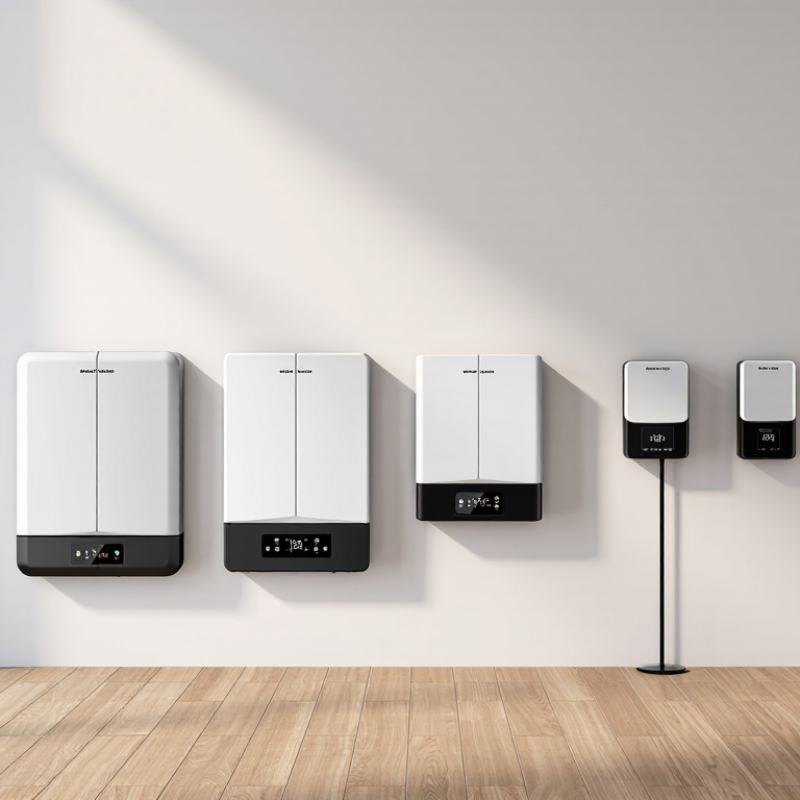
Ten wall-mounted batteries for home energy storage should be compared by the jobs they can actually do. A useful shortlist might include compact 5 kWh units, larger 10 kWh systems, expandable modules, high-output batteries, and models with integrated inverters. It should also cover options designed for solar self-consumption, evening peak use, essential-load backup, indoor installation, or outdoor installation. Chemistry matters, too. Lithium iron phosphate is common in residential storage, but usable capacity, power output, warranty terms, and system compatibility still vary.

The International Energy Agency’s 2024 Batteries and Secure Energy Transitions report projects that battery storage capacity in the power sector could grow fourteenfold by 2030. That trend makes home storage more visible, but a global forecast cannot tell you which battery fits a particular house. A refrigerator, router, and a few lights need less power than an electric cooking range or central air conditioning. Check both kilowatt-hours and continuous kilowatts. They measure different things.

Installation details matter. Measure the wall space, confirm the mounting surface, and ask where cables and ventilation will go. A tidy specification sheet can still hide inconvenient limits. I would compare real usable capacity, backup switching, and expansion costs before choosing. The “best” option may be smaller than expected. That deserves a second look.

10 Best Wall Mounted Batteries for Home Energy Storage - Ten Wall-Mounted Batteries for Home Energy Storage

The entries below are representative wall-mounted battery capacity classes, not specific products or a brand ranking. Figures are typical market ranges; actual specifications, usable capacity, power, efficiency, cycle life, and warranty vary by system and installation.

No. Representative Capacity Class Typical Nominal Capacity Typical Usable Capacity Common Chemistry Typical Continuous Output Common System Voltage Typical Round-Trip Efficiency Typical Rated Cycle Life Common Warranty Term
1 Compact backup 4–5 kWh About 3.6–4.8 kWh Lithium iron phosphate (LFP) or lithium-ion 1.5–3 kW Typically 48 V nominal or high-voltage About 90–95% Often 6,000–10,000 cycles, depending on rating conditions Commonly around 10 years
2 Small daily-use storage 5–6 kWh About 4.5–5.7 kWh LFP or lithium-ion 2–3 kW Typically 48 V nominal or high-voltage About 90–95% Often 6,000–10,000 cycles, depending on rating conditions Commonly around 10 years
3 Entry-level household storage 7–8 kWh About 6.3–7.6 kWh LFP or lithium-ion 2.5–4 kW Typically 48 V nominal or high-voltage About 90–95% Often 6,000–10,000 cycles, depending on rating conditions Commonly around 10 years
4 Single-unit home storage 9–10 kWh About 8.1–9.5 kWh LFP or lithium-ion 3–5 kW Typically 48 V nominal or high-voltage About 90–95% Often 6,000–10,000 cycles, depending on rating conditions Commonly around 10 years
5 Medium household storage 11–12 kWh About 9.9–11.4 kWh LFP or lithium-ion 3.5–6 kW Typically 48 V nominal or high-voltage About 90–95% Often 6,000–10,000 cycles, depending on rating conditions Commonly around 10 years
6 Extended evening-use storage 13–14 kWh About 11.7–13.3 kWh LFP or lithium-ion 4–7 kW Typically 48 V nominal or high-voltage About 90–95% Often 6,000–10,000 cycles, depending on rating conditions Commonly around 10 years
7 Large single-unit storage 15–16 kWh About 13.5–15.2 kWh LFP or lithium-ion 5–8 kW Typically 48 V nominal or high-voltage About 90–95% Often 6,000–10,000 cycles, depending on rating conditions Commonly around 10 years
8 High-capacity household storage 17–18 kWh About 15.3–17.1 kWh LFP or lithium-ion 5–9 kW Typically 48 V nominal or high-voltage About 90–95% Often 6,000–10,000 cycles, depending on rating conditions Commonly around 10 years
9 Large backup and self-consumption storage 19–20 kWh About 17.1–19 kWh LFP or lithium-ion 6–10 kW Typically 48 V nominal or high-voltage About 90–95% Often 6,000–10,000 cycles, depending on rating conditions Commonly around 10 years
10 Expandable multi-unit system 20 kWh or more in combined capacity Depends on the number of modules and system reserve settings Usually LFP or lithium-ion About 6–12 kW or more, depending on inverter and configuration 48 V nominal or high-voltage, depending on system design About 90–95% Often 6,000–10,000 cycles, depending on rating conditions Commonly around 10 years

Comparing Battery Capacity, Power, Compatibility, and Warranty

Comparing ten wall-mounted home batteries starts with usable capacity, not the largest number on a label. A 10 kWh unit may reserve some energy for battery protection, so check its usable figure. Then estimate overnight loads: a refrigerator, several lights, and a router use less energy than electric cooking or space heating. Numbers need context.

Power ratings answer a different question. Continuous output determines what can run together, while surge output matters when a motor starts. A battery with ample capacity can still struggle with a well pump or several appliances if its output is modest. Compare both ratings with the home’s essential-load panel, and check whether backup switching is included or requires separate equipment. Check the details.

Compatibility deserves equal weight. Confirm the battery works with the existing inverter, solar system, and monitoring equipment; otherwise, extra hardware or a redesign may be needed. Warranty terms should specify years, cycle limits, retained-capacity thresholds, and any energy-throughput cap. Read exclusions for installation conditions and temperature. I would not rank two systems by warranty length alone: a longer term with strict usage limits may offer less practical protection. The comparison is imperfect, since published tests and household demand rarely match exactly.

10 Best Wall Mounted Batteries for Home Energy Storage

An anonymized comparison of representative residential battery specifications. Capacity and continuous power depend on the exact model and system configuration.

Compatibility depends on the inverter and installation setup. Warranty periods, energy-throughput limits, and coverage terms vary by model; verify them with the product documentation before comparing options.

Matching a Battery System to Household Energy Needs

Choosing a wall-mounted battery starts with the loads you need to keep running, not the biggest capacity on the shelf. The U.S. Energy Information Administration reports that an average household used 10,791 kWh of electricity in 2022, or about 29.6 kWh per day. That figure is a useful benchmark, not a sizing rule: a home may use far less during an outage if it powers only the refrigerator, lights, internet router, and a few outlets. List each essential appliance, its wattage, and expected daily hours. Then compare the total with the battery’s usable capacity, not just its advertised capacity. Check the label.

Power output matters too. A battery may store enough energy for a day but still struggle when a well pump, microwave, and heating system start together. NREL’s Storage Futures Study highlights how storage value depends on duration and when energy is needed. In practical terms, compare continuous and peak output ratings, and check whether the system can support your intended circuits. I would avoid assuming that a “whole-home” label guarantees whole-home backup; actual performance depends on wiring, inverter limits, and household demand.

Tips: Keep a simple outage log for a week. Note which devices run, and for how long. Add a reserve for cloudy days or longer outages, but be realistic about budget and space. A little over-sizing can help. Too much can mean paying for capacity you rarely use. Revisit the estimate after major changes, such as adding an electric vehicle or heat pump.

Article Source:

  • wall mounted battery storage exporter supplier in japan
  • wall mounted battery storage factory from china

Copyright © 2021 Payless Pet Products - All Rights Reserved.