China Top 10 Outdoor Down Jacket Manufacturers?
China has become a major sourcing base for technical outerwear, including the Outdoor Down Jacket. Its manufacturers serve private labels, retailers, and performance brands worldwide. However, factory capability differs greatly between suppliers.
This guide examines China’s top ten Outdoor Down Jacket manufacturers through practical purchasing criteria. The review considers production experience, down sourcing, fabric performance, stitching quality, and customization capacity. It also looks at sample development, minimum order quantities, lead times, and communication.
Small details reveal manufacturing discipline. A reliable factory should explain its fill-power testing clearly. It should also show how baffles limit cold spots. Stronger evidence comes from production samples, inspection records, and traceable material documents. Certifications may support credibility, but they should be verified rather than assumed.
No ranking is perfect.
Supplier performance can change with new equipment, management, or export demand. A factory that performs well for large seasonal orders may not suit a small startup. Another supplier may offer excellent sewing but limited design support. These differences matter.
The following overview therefore avoids relying on marketing language alone. It compares observable capabilities and highlights questions buyers should ask before signing a contract. Readers should confirm current certificates, factory capacity, and compliance requirements independently. Weather protection also needs real testing, not attractive photography. A jacket can look premium while losing warmth through poor seam construction.
This balanced approach helps brands identify suitable partners, reduce sampling mistakes, and build more dependable long-term sourcing decisions.
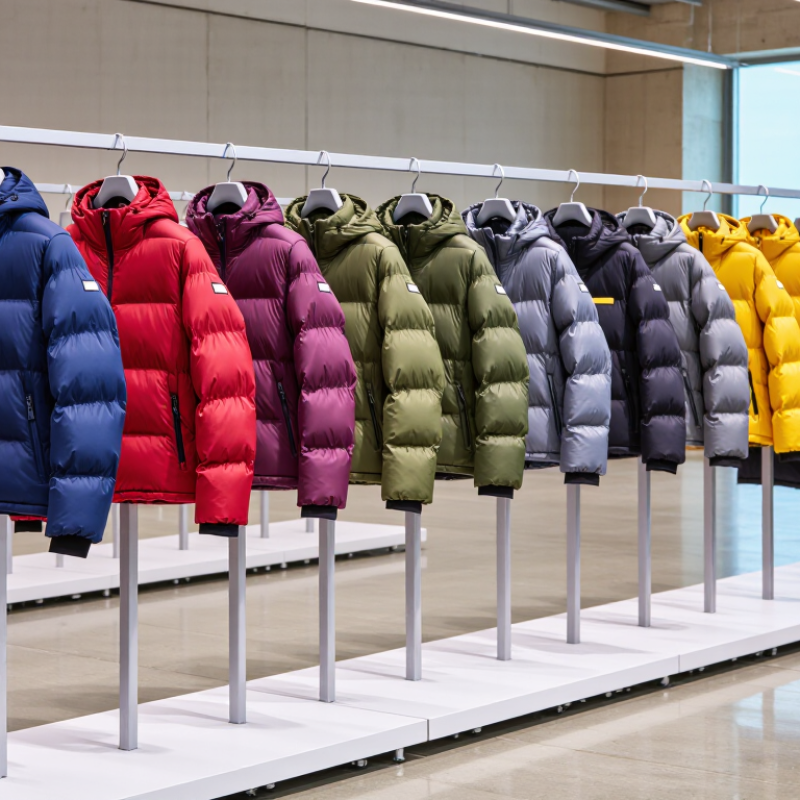
How China’s Outdoor Down Jacket Manufacturing Industry Has Developed
China’s outdoor down jacket industry grew from traditional garment workshops into a closely connected manufacturing network. Early production focused on warmth, basic stitching, and seasonal demand. Later, export orders introduced stricter quality control and more specialized equipment. Factories in major apparel regions began testing down content, fill power, fabric strength, and seam leakage. Better cutting systems also reduced wasted fabric. Supply chains became faster, linking shell fabric mills, zipper suppliers, insulation processors, and inspection laboratories. This development helped many manufacturers serve technical outdoor markets, not only domestic winter clothing buyers. The change was substantial, but it was not perfectly linear.
Today, leading manufacturers usually combine product engineering with flexible production. They may use laser cutting, narrow quilting channels, water-resistant shells, and calibrated filling machines. A practical jacket must remain light, warm, washable, and comfortable during movement. Factory experience matters here. Engineers often adjust baffle size after wear tests, especially around the shoulders, cuffs, and hood. Traceability has also become more important, from raw down inspection to final packing. However, some suppliers still overstate warmth or rely on laboratory figures alone. That gap deserves scrutiny. Real performance depends on humidity, layering, fit, and wind exposure. Buyers should review test records, sampling procedures, worker training, and production consistency before ranking China’s top ten manufacturers.
China Top 10 Outdoor Down Jacket Manufacturers? - How China’s Outdoor Down Jacket Manufacturing Industry Has Developed
Industry-level development timeline and manufacturing indicators, excluding company and brand rankings
| Period | Industry Milestone | Verified Development Fact | Impact on Outdoor Down Jacket Manufacturing | Reference Framework |
|---|---|---|---|---|
| 1978–1980s | Beginning of industrial expansion | China’s reform and opening-up accelerated the development of export-oriented textile and garment production, creating the industrial base for later apparel supply chains. | Garment production gradually moved from small-scale workshops toward standardized factories with greater sewing, finishing, and quality-control capacity. | China’s reform and opening-up policy; national textile-industry development records |
| 1990s | Growth of textile and apparel clusters | Specialized textile and garment clusters expanded in eastern and coastal regions, bringing fabric mills, trim suppliers, sewing facilities, washing plants, and logistics providers into closer proximity. | The cluster model shortened lead times and supported more coordinated production of technical outerwear and insulated garments. | National and regional textile-industry development reports |
| 11 Dec 2001 | Accession to the WTO | China became a member of the World Trade Organization on 11 December 2001, increasing integration with international trade and manufacturing supply chains. | Outdoor apparel factories gained broader access to overseas buyers and faced stronger requirements for delivery reliability, product consistency, and compliance documentation. | World Trade Organization, China Member Information |
| 2010–2012 | National textile safety requirements | China’s mandatory textile-product safety framework, including GB 18401, established requirements covering factors such as formaldehyde, pH value, color fastness, and decomposable aromatic amines. | Down jacket manufacturers had to strengthen incoming-material inspection, finished-garment testing, labeling control, and supplier documentation. | GB 18401, National General Safety Technical Code for Textile Products |
| 2011–2012 | Dedicated down garment standardization | The national standard GB/T 14272-2011 established technical requirements and test methods for down garments, including down-content and garment-quality requirements. | Manufacturers increasingly adopted standardized down inspection, filling-weight control, product labeling, and finished-garment testing procedures. | GB/T 14272-2011, Down Garments |
| May 2015 | Manufacturing modernization policy | The Made in China 2025 strategy identified intelligent manufacturing, quality improvement, green manufacturing, and innovation as major industrial priorities. | Outdoor apparel production began placing greater emphasis on automated cutting, digital production management, process traceability, energy efficiency, and technical-material development. | State Council, Made in China 2025 |
| 2010s | Expansion of technical outerwear capabilities | Manufacturers increasingly combined lightweight woven fabrics, water-repellent finishes, seam-construction techniques, quilting, pattern engineering, and down-channel design for outdoor applications. | Factories became better equipped to produce garments balancing warmth, weight, packability, weather resistance, and mobility. | Textile and garment manufacturing technology practices |
| 2020 | Carbon-reduction direction established | China announced the goals of reaching peak carbon emissions before 2030 and achieving carbon neutrality before 2060. | The policy direction encouraged lower-energy production, cleaner finishing processes, reduced material waste, and greater attention to environmental data in apparel supply chains. | China’s 2030 carbon-peaking and 2060 carbon-neutrality commitments |
| 1 Jan 2022 | RCEP entered into force for China | The Regional Comprehensive Economic Partnership entered into force for China on 1 January 2022, creating a broader regional framework for trade and rules of origin. | The agreement supported regional sourcing and export opportunities for down garments, fabrics, accessories, and related textile inputs, subject to applicable customs rules. | Regional Comprehensive Economic Partnership, official agreement information |
| 1 Apr 2022 | Updated down garment standard implemented | GB/T 14272-2021 replaced the previous down garment standard and took effect on 1 April 2022, updating technical terminology, testing provisions, and product requirements. | Manufacturers had to update specifications, testing procedures, labels, quality-control documents, and production systems for down-filled garments. | GB/T 14272-2021, Down Garments |