How to Choose a Tornado Toilet in 2026
In 2026, a Tornado Toilet may sound like an easy upgrade: a powerful swirl, a cleaner bowl, and less scrubbing. But the name alone does not tell you how well a model performs. Some manufacturers use similar terms for different flushing designs, so check the exact model specifications before comparing claims. A polished showroom display can help you picture the finish, but it cannot show how the toilet handles your home’s water pressure or plumbing.
Start with the basics. Confirm the rough-in measurement, outlet type, bowl height, and available space. Then compare the flush system, water use, noise, and cleaning needs using manufacturer documentation and credible product reviews. Look for clear warranty terms and replacement parts you can actually obtain. Check the seat, too; a comfortable bowl is less useful if the lid feels flimsy or the shape does not suit your bathroom. Small details matter.
Looks are not enough. A dramatic flush description is not proof of reliable performance, and “self-cleaning” should not be read as “maintenance-free.” Consider who will use the toilet, how often, and whether its controls are simple to reach. If possible, inspect a working display model, not just a product photo. I would also leave room for uncertainty: advertised features do not always feel equally useful in everyday life. This guide explains which specifications deserve attention, what questions to ask a retailer, and how to choose a Tornado Toilet that fits your bathroom, budget, and routine—not just the trend.
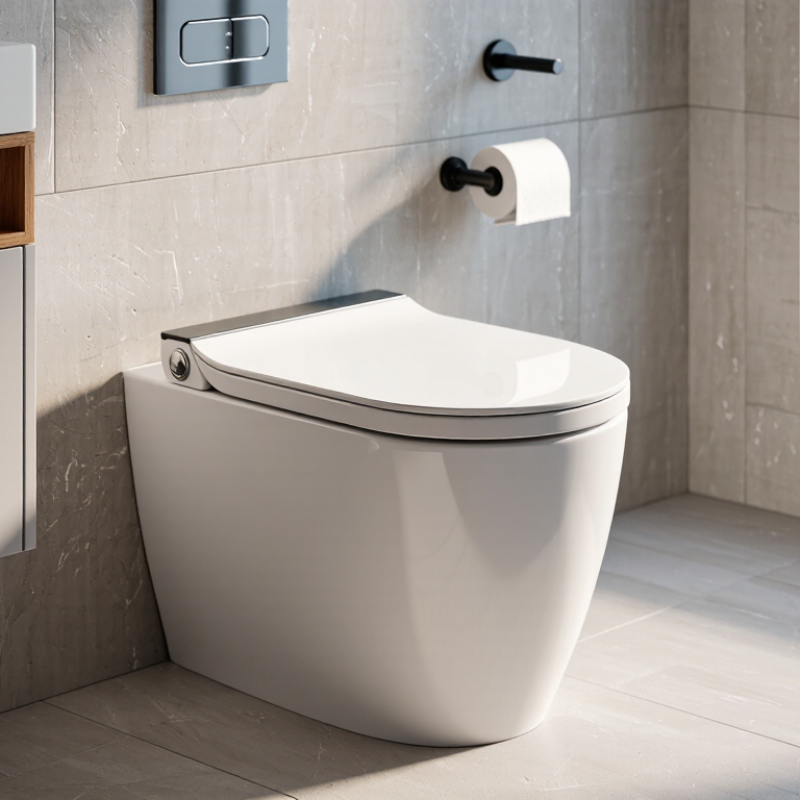
Define Tornado-Flush Technology and Compare Manufacturers’ Performance Data
Tornado-flush describes a bowl-cleaning pattern in which water enters through angled outlets and swirls around the bowl. The name is not a universal engineering standard. Port placement, rim shape, and water pressure differ between models. Some toilets use gravity; others add pressure assistance. A strong-looking swirl is not proof of a complete flush. Check whether the bowl rinses evenly, including beneath the rim, and whether waste clears without repeated flushing. Listen, too. A quiet flush may matter in a small bathroom.
Compare manufacturers’ published test data, but check how each figure was measured. Useful details include water volume per flush, waste-removal capacity in grams, and the test standard or protocol used. Higher removal figures can be informative, yet results from different test methods may not be directly comparable. Look for independent certification or a clearly described, repeatable test. Note any stated limits, such as supply pressure or fixture setup. Then consider practical details: refill time, splash, and replacement-part availability. Data can look neat on a chart; household performance is less tidy. I would treat vague claims like “powerful flush” cautiously and ask for the actual test conditions.
Measure the Rough-In: 12 Inches Is the Common Residential Standard
How to Choose a Tornado Toilet in 2026
Measure the rough-in before comparing toilet shapes or flushing features. In many homes, the common residential rough-in is 12 inches. Measure from the finished wall to the center of the floor drain, or to the center of the closet bolts on an existing toilet. Keep the tape level. A baseboard can make the wall seem farther away, so measure from the wall surface, not the trim.
Twelve inches is common, not universal. Older homes may have 10-inch or 14-inch rough-ins, and a toilet made for the wrong distance may not sit properly. Check the installation sheet for the exact model before buying. Also leave room for the tank and seat to clear nearby shelves, doors, and cabinets. A tape measure can still mislead if you measure from unfinished framing or guess where the drain center lies. It is worth measuring twice.
Tips: Write down the measurement and note whether it starts at the finished wall. If the toilet is already installed, gently remove the bolt cap and measure to the bolt center. For a remodel with exposed flooring, confirm the finished wall position before ordering. That small detail is easy to overlook.
Compare Bowl Shape, Seat Height, Trapway, and MaP Flush-Test Scores
A tornado-style flush should not distract from basic fit. Round bowls can save space in a tight bathroom; elongated bowls provide more sitting room but need extra clearance. Measure from the wall to the seat’s front edge before buying. Seat height also matters: standard seats are often about 15 inches from floor to rim, while comfort-height models are commonly around 17 to 19 inches. Check the actual product dimensions, since seat thickness changes the finished height. Fit matters.
Inspect the trapway specification, but don’t assume a wider opening guarantees fewer clogs. Look for a smooth, glazed passage and confirm the manufacturer states its dimensions. MaP’s published performance database reports flush-test results in grams of standardized waste. A 600-gram score and a 1,000-gram score indicate different tested loads, not different water use. Treat the score as useful evidence, not a promise that every real-world flush will behave identically. Testing conditions are controlled.
Compare the MaP result with water use. The U.S. EPA WaterSense specification limits labeled tank-type toilets to 1.28 gallons per flush, at least 20 percent below the federal 1.6-gallon standard. A strong choice pairs an acceptable MaP score with that efficiency, a comfortable seat height, and a bowl that fits your room. I’d still check whether replacement seats and parts are easy to find; that detail is often overlooked. A spec sheet can’t tell you how the seat feels.
Check Installation Requirements, Replacement Parts, Warranty, and Total Cost
A “tornado” toilet uses a swirling rinse pattern, but the name alone does not confirm it will fit. Before ordering, measure from the finished wall to the closet bolts; a 12-inch rough-in is common, not universal. Check bowl projection, door swing, supply-line position, and clearance beside the vanity. Small mismatch, big hassle.
For replacement parts, ask for the exact model number and a parts diagram before paying. Confirm that the flush valve, seals, seat, and any electronic components can be obtained locally or shipped within a reasonable time. A toilet can work well and still become frustrating if one proprietary part is unavailable. Photograph the model label during installation; it is easy to forget where it sits.
Read the warranty itself, not just the headline term. Check coverage for the tank, bowl, and moving parts, plus who pays for labor, freight, or removal. Then compare total installed cost: toilet, delivery, plumber, new fittings, disposal, and possible floor or flange repairs. Those hidden items matter. If estimates are vague, leave room in the budget; my first calculation would probably miss one.