How to Choose the Best Chops Spice for Your Business?
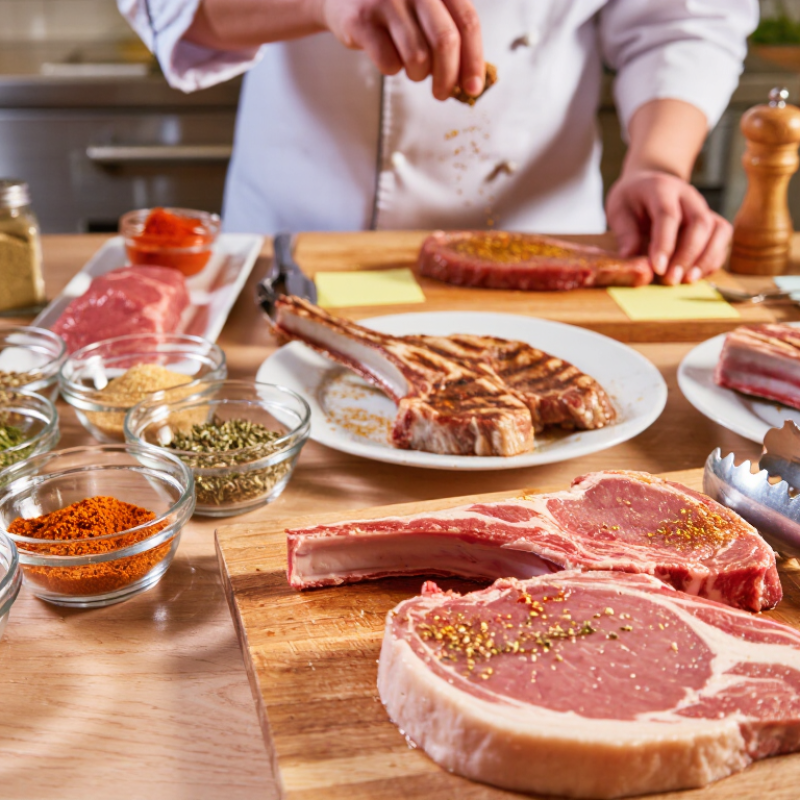
Choosing the right Chops Spice can shape flavor consistency, kitchen efficiency, and customer satisfaction. For a restaurant, butcher, caterer, or food manufacturer, the best blend is not automatically the hottest or cheapest. It must suit the product, cooking method, and customers’ expectations. Small details matter: how the seasoning coats meat, whether its aroma survives grilling, and how easily staff can repeat a recipe during a busy service. Taste it in the actual dish. A spoonful from the packet tells only part of the story.
Start by reviewing the ingredient list, flavor profile, and intended use. Check whether the blend contains salt, sugar, or allergens that affect your recipe or customer information. Ask suppliers about batch consistency, product specifications, packaging sizes, and shelf-life guidance. Reliable documentation helps buyers compare options, but practical testing matters too. Try the spice on several cuts and cooking methods, then record quantities, cooking conditions, and feedback. Keep samples from different batches when possible. A blend may perform differently after storage, or with a new supplier. That deserves attention.
Price should be weighed against dosage, waste, and the finished dish—not just the cost per bag. Request samples, test them with your team, and compare results using the same recipe. A simple tasting sheet can capture aroma, heat, color, texture, and overall balance. Some businesses may need a mild, flexible blend; others may prefer a bold signature profile. There is no universal winner. The right Chops Spice is the one that fits your menu, supply needs, and quality standards consistently. Be willing to revise your choice.
Define the Chops Flavor Profile Using Scoville Heat Units (SHU)
For a commercial chops spice, define heat before choosing ingredients. Scoville Heat Units (SHU) offer a practical starting point: New Mexico State University’s Chile Pepper Institute lists jalapeños at roughly 2,500–8,000 SHU, cayenne at 30,000–50,000, and habaneros at 100,000–350,000. These ranges show how widely pepper heat can vary. They are not exact guarantees for every harvest.
Set a target customers can recognize. A mild seasoning might lean on lower-heat peppers, while a hotter blend could use cayenne in a measured proportion. SHU describes pungency, not the whole flavor profile. It cannot tell you whether a pepper tastes fruity, smoky, or grassy. Test small batches on actual chops, because fat, salt, and cooking time can change how heat is perceived. Record the pepper source and batch results. A tasting panel helps, too.
One caveat. Pepper SHU ranges overlap and vary with growing conditions, so a specification on paper may not match the finished dish. Start with a conservative dose, then adjust in small increments. Let the seasoning rest on cooked meat before tasting; the first bite can be misleading. I would not treat a single SHU number as a final recipe. Use it to narrow choices, then confirm the flavor through repeatable kitchen tests.
Verify Spice Safety Through FDA 21 CFR Part 117 Controls
A chops-spice blend may contain only a few ingredients, but each one brings its own food-safety considerations. When comparing suppliers, ask how they control hazards such as pathogens, foreign material, and undeclared allergens. A low price or attractive sample cannot answer those questions.
Where applicable, FDA 21 CFR Part 117 calls for current good manufacturing practices and a risk-based food-safety plan. Review how your facility receives, stores, blends, and packs spices. Check supplier approval procedures, hazard analyses, preventive controls, and relevant verification records. A certificate of analysis can help, but it does not replace a broader review of supplier controls. Details matter. Also confirm that staff responsible for preventive controls have suitable training and responsibilities.
On site, look for practical signs: sealed ingredient containers, clear lot identification, clean blending equipment, and records showing what happened when a check failed. Keep records. A polished supplier packet can still leave gaps between its claims and your actual process. That deserves a second look. Match any testing or treatment steps to identified hazards, and verify that controls work as intended. Requirements may vary by operation, so document the reasoning behind your plan and seek qualified food-safety advice when the risks are unclear.
How to Choose the Best Chops Spice for Your Business
Use this FDA 21 CFR Part 117 applicability map when reviewing spice suppliers and food-safety controls.
How to read this chart: 1 = generally applicable to facilities subject to the rule; 2 = applies when triggered by the hazard analysis or supply-chain circumstances. These are regulatory applicability codes, not scores, inspection results, or supplier performance data. Exemptions and modified requirements may apply.
When comparing chops spice suppliers, review ingredient specifications, hazard information, and supplier documentation alongside the controls relevant to your facility’s food-safety plan.
Check the 9 Major U.S. Allergens and Cross-Contact Risks
Choosing a chops spice means checking more than flavor and heat. In the United States, the nine major food allergens are milk, eggs, fish, crustacean shellfish, tree nuts, peanuts, wheat, soybeans, and sesame. A seasoning may contain one directly, or pick it up through a shared line. Read the full ingredient statement, then request current allergen information from each supplier. Small print matters.
Cross-contact can happen in ordinary places: a shared grinder, a dusty filling funnel, or a scoop moved between open bins. Ask whether equipment is dedicated or cleaned between runs, and how that cleaning is verified. Check specifications by product and lot when available. A supplier’s general assurance may not answer every practical question. That gap deserves follow-up.
Before adding a blend to your menu, map its ingredients against your kitchen’s storage and preparation steps. Keep sealed containers separate, use labeled utensils, and train staff not to swap scoops. If a label or supplier document is unclear, pause and seek clarification rather than guessing. Even a careful checklist can miss a gasket or a rushed refill. That is worth reviewing.
Compare Suppliers Using Certificates of Analysis and Lot Traceability
A certificate of analysis should describe the exact spice lot you may receive, not just a supplier’s general product range. Check that its lot number matches the number on the quotation, sample label, and shipping documents. Review the test date, methods, and results for relevant measures such as moisture, microbial quality, and allergen controls. Ask whether testing was performed in-house or by an independent laboratory, and how samples were collected. Details matter. A polished PDF can still leave practical questions unanswered.
Lot traceability should let your team follow a bag of chops spice back through blending and ingredient records. Request a sample traceability record, with sensitive commercial details removed if needed. Confirm that the supplier can identify ingredient lots and provide a clear process for investigating quality concerns. Keep the paperwork with your receiving records; mismatched lot codes can slow a routine check. It is easy to overvalue certificates, though: they reflect tested samples, not necessarily every bag. Ask what happens when a result falls outside specification, and get the answer in writing.
Calculate Cost per Chop by Spice Dose, Not Price per Pound
A low price per pound can hide a high cost per serving. For a restaurant, the useful figure is the spice cost on each chop. Divide the package cost by its usable grams, then multiply by the grams applied to one portion. A $18 bag with 500 usable grams costs $0.036 per gram. At a 1.5-gram dose, that is about $0.054 per chop.
Measure the dose on a small test batch. Weigh the spice before and after seasoning several chops, then calculate the average amount used. A scale that reads tenths of a gram helps with small portions. Use the same seasoning method your kitchen actually follows, including any shaker loss. The math is simple; the handling is less tidy. One cook’s generous shake can change the result.
Compare spices at the dose that delivers the flavor your guests expect, not at equal weights. A stronger blend may need less, while a mild one may require more. Record the dose, package cost, and number of chops seasoned, then check the figures again when staff or recipes change. It is an imperfect measure, but it beats choosing by bulk price alone.