Choosing the right Multi-effects pedal is less about owning every effect and more about finding a setup that suits your music, hands, and stage routine. A compact unit can cover delays, reverbs, modulation, and amp simulations, but a crowded screen may slow you down when the drummer counts in. Think about your real needs: bedroom practice, direct recording, or quick changes under stage lights. Then check the details that shape daily use, including footswitch layout, editing controls, sound quality, and connection options.
Effects designer Robert Keeley is often associated with a practical principle: judge effects by the sounds they help you make, not by the size of the feature list. Treat that as guidance, not a verbatim quotation. Try patches at realistic playing volume. Listen for muddy low notes, sharp high frequencies, and delays that disappear in a full mix. A preset can sound impressive alone. It may not fit your band.
This guide explains how to compare models, test essential effects, and assess workflow before buying. It also considers trade-offs between deep editing and simple controls, plus the value of reliable updates and clear documentation. Your first choice may not be perfect. That is worth admitting. A good pedal should make useful sounds easy to reach, while leaving room for your own taste to change.
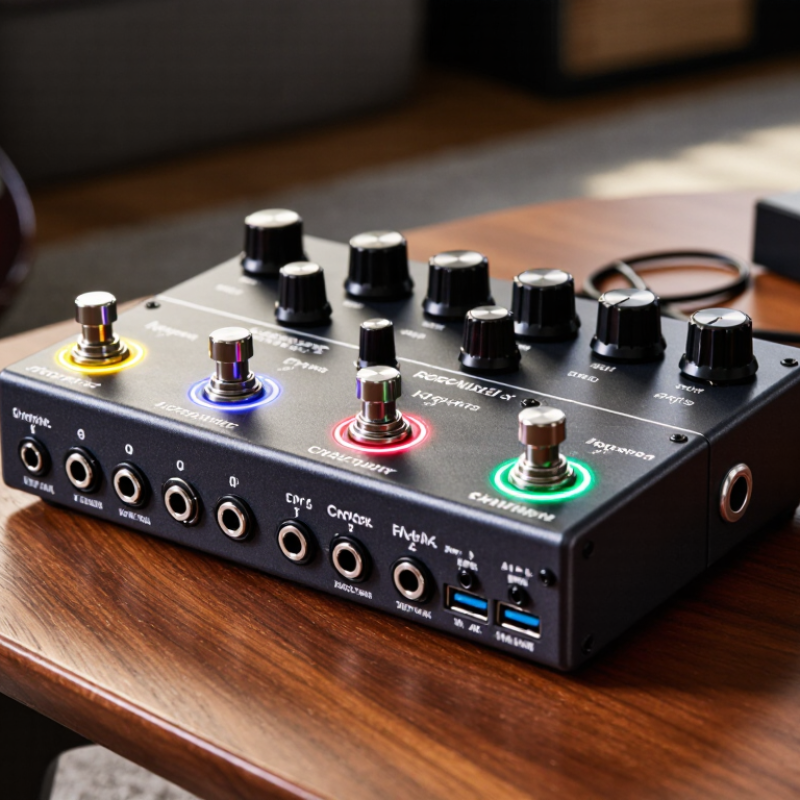
Begin with the sounds you actually use, not the longest effect list on a screen. If you play clean rhythm, a subtle chorus, short delay, and spring-like reverb may matter more than dozens of high-gain options. For heavier parts, check whether the pedal can keep a tight low end while adding distortion and shaping the mids. Think about your usual songs, guitar, and amplifier; the same preset can sound bright in one setup and muddy in another.
Less can be better. Picture your foot switching sounds during a chorus: are the controls easy to reach, and can you change several effects at once? If you build sounds from scratch, clear editing and adjustable effect order may be worth more than a huge preset library. If you prefer quick setup, useful factory sounds and simple navigation can save rehearsal time. Try the pedal at a realistic volume, and listen for noise between notes. A headphone demo may hide problems that appear through an amplifier. I’d also leave room to revise your priorities: it’s easy to assume you need every effect until a crowded chain makes playing feel less natural. A basic list of three essential sounds can keep the choice grounded.
A multi-effects pedal can combine overdrive, compression, modulation, delay, and reverb, but the effect list alone tells you little. Match the available sounds to your playing: gentle chorus may suit clean chords, while a short delay can add space without muddying fast phrases. If the pedal includes amp or cabinet simulations, check whether they fit your intended setup. Small differences matter. Listen for hiss, abrupt volume jumps, and effects that become harsh when stacked.
Presets are useful when you need to move quickly between sounds. Check how many can be saved, how easily they can be edited, and whether switching presets cuts off a ringing note. Try building one sound for a quiet verse and another for a louder chorus. Keep their output levels close; otherwise, a preset may feel better simply because it is louder. I sometimes find preset editing more fiddly than expected, so test the controls before relying on them live.
Signal routing determines how effects interact. A pedal with a fixed chain is simpler, while adjustable routing lets you place modulation before or after distortion, or split a signal into parallel paths. That flexibility can help preserve clarity, though it may take time to understand. Connect the pedal to your actual amp or headphones, then test a few chains at realistic volume. A delay before distortion can sound smeared; after distortion, its repeats may stay clearer. Check input and output options, too, so the pedal fits your instrument and recording setup.
Sound quality is more than a long list of effects. Compare clean and distorted tones at matched volume, using headphones and an amp if possible. Listen for hiss, harsh high notes, and a delay tail that cuts off abruptly. Trust your ears. The IFPI Global Music Report 2024 says recorded-music revenue reached US$28.6 billion in 2023, up 10.2%. This measures music revenue, not pedal sales, so it is context—not proof that one unit is better.
Controls matter when you need a quick change mid-song. Try adjusting a preset without looking down; tiny labels or deep menus can slow you down. Check whether footswitches can change scenes, tap tempo, or control a tuner. Connectivity should fit your setup: confirm input and output options, headphone use, USB recording, and any MIDI or effects-loop needs. A stereo output is useful for spacious delays, but may add little to a simple mono rig. I still find menus frustrating, even on capable units.
Tips: Bring your guitar and one familiar cable when testing. Save a preset, switch it, then check whether the sound and level stay consistent. A little fiddly? That matters.
A multi-effects pedal should fit the way you actually travel and play. If you carry your gear on foot, check its weight, dimensions, and power needs before buying. A compact unit can save space, but tiny controls may be awkward under dim stage lights. Still, small and convenient are not always the same thing. Try switching presets with your hands, not just studying product photos. A few minutes of testing can reveal cramped buttons or a hard-to-read screen. That matters.
Reliability deserves equal attention. Inspect the footswitches, sockets, and enclosure, especially if the pedal will move between rehearsals and gigs. Test it with your guitar, headphones, and intended power supply; connections that seem fine at home may loosen after repeated setup. Listen for unwanted noise, and check whether settings remain saved after power is removed. Not glamorous, but useful. Set a budget that includes any needed cables or power accessories, not just the pedal itself. Compare the features you will use regularly, such as preset storage and clear volume controls. Leave room for a little doubt: a long feature list can look impressive, yet add little to your sound. An inexpensive option may suit casual practice, while frequent performers may value sturdier construction and easier operation. You may still change your mind after a few sessions. That is part of choosing well.
Compare approximate new-purchase price ranges by format. Prices vary by features and market; portability and reliability also depend on weight, build quality, and available support.
Portability: Compact units are generally easier to carry; check the weight and whether the controls suit your setup. Reliability: Look for sturdy construction, dependable connections, and accessible support. Budget: Compare the price with the effects, inputs, outputs, and foot controls you actually need.
Bring your own guitar, cables, and the amp or monitor you expect to use most. A multi-effects pedal can sound polished through headphones yet feel harsh through your familiar amplifier. Test at a realistic playing volume, and match levels between the pedal’s bypass and processed sounds. Louder often seems better, even when the tone is not.
Try a clean sound, a driven sound, and one preset with several effects active. Play the same short riff through each setup, then listen for muddy low notes, sharp high frequencies, and changes in picking feel. Small differences matter. Check whether switching presets causes an abrupt volume jump, and whether the controls make sense without a manual in your hands. I sometimes spend too long tweaking one patch; that can hide how the pedal responds to ordinary playing. Give yourself a time limit, save a few settings, and revisit them the next day. If possible, test with your own headphones too, but treat them as a separate listening environment, not a substitute for your usual rig.
Compare shortlisted units under the same conditions: use your own instrument, cables, amplifier, and playing volume. Record observations for each unit rather than relying on preset demos alone.
| Test dimension | How to test with your gear | What to record | Decision cue |
|---|---|---|---|
| Basic signal compatibility | Connect your instrument and amplifier using the connection method you expect to use. Check the unit’s input and output options and follow its manual for instrument- or line-level settings. | Connections used; any adapters or extra cables needed; whether the setup works as intended. | Prefer a unit that supports your actual setup without awkward routing or unplanned accessories. |
| Input headroom | Play your loudest passages, including hard-picked notes and chords, with your usual instrument settings. Listen for unwanted distortion when effects are set clean. | Any clipping or harsh breakup; input setting used; instrument pickup and volume setting. | A clean input at your normal playing level is important if you want the effects—not accidental input clipping—to shape the sound. |
| Noise and hum | Listen with the effects bypassed, then with your typical high-gain and modulation sounds enabled. Keep the amplifier and room setup consistent between candidates. | Background hiss or hum; whether it changes with gain, effect type, or instrument position. | Judge noise in the context of your real rig; high-gain settings and electrical environments can affect noise levels. |
| Tone with your amplifier | Compare bypassed sound with a basic effect patch at matched perceived volume. If you plan to use an effects loop or a direct output, test that intended connection separately. | Volume difference; tonal changes; connection method; settings that needed adjustment. | Choose the routing and bypass behavior that suits your amplifier and preferred signal path. |
| Playing feel and dynamics | Play softly and loudly, use sustained notes, and try bends, muted notes, and chords. Repeat the same phrases on each shortlisted unit. | Response to picking strength; note decay; whether the effects feel natural for your playing. | There is no universal best setting; prioritize the response that feels right with your technique. |
| Preset changes | Switch between two contrasting sounds while playing. Check whether the change is immediate and whether delay or reverb tails behave as you want. | Audible gap or abrupt change; tail behavior; ease of reaching the next sound. | Test transitions in the way you perform; tail preservation and switching behavior can vary by unit and setting. |
| Foot control and navigation | Operate the footswitches while standing and playing. Try selecting a preset, turning an effect on or off, and adjusting a parameter if the unit supports those actions. | Switch layout; accidental presses; number of steps needed for common changes. | Controls should be practical to use live, not just easy to edit while seated. |
| Expression and external control | If you need an expression pedal or external footswitch, verify supported connections and functions in the manual, then test the exact accessory and cable type you plan to use. | Compatible accessory; assignable functions; setup steps; any limitations stated in the manual. | Do not assume all expression pedals or footswitches are compatible; confirm the requirements for the specific unit. |
| Mono or stereo setup | Test mono if you use one amplifier. If you plan a stereo rig or stereo recording, connect both outputs to the intended destinations and check the result. | Outputs used; whether the effects you need work as expected in that setup. | A stereo feature is useful only if it fits your actual playback or recording chain. |
| Ease of editing | Build one simple sound from scratch, save it if supported, then find and adjust a setting later without following a tutorial. | Time or steps taken; menu clarity; whether saving and recalling the sound is straightforward. | Choose an editing workflow you will realistically use for creating and maintaining your sounds. |
| Final shortlist score | Repeat the same tests for each candidate at a similar listening level. Give extra weight to the features you need most, such as live control, amp integration, or direct recording. | Candidate: __________ Overall score: ____ / 5 Best feature: __________ Main concern: __________ | 1 = poor fit · 3 = acceptable · 5 = excellent fit |
Comparison note: Keep your instrument, amplifier settings, cables, and listening volume as consistent as possible. Record model-specific connections and limitations from the unit’s manual; the best choice depends on your gear, playing style, and intended use.
Copyright © 2021 Payless Pet Products - All Rights Reserved.