Payless Pet Products

Payless Pet ProductsPayless Pet ProductsPayless Pet ProductsPayless Pet Products
  • Home
  • New Website
  • Fish Amoxi Forte 500mg
  • Fish Aug 625mg
  • Fish Cipro Forte
  • Fish Clinda Forte
  • Fish Doxy
  • Fish Fluco Forte
  • Fish Itra
  • Fish Keto
  • Fish Levo 500mg
  • Fish Zithro 250mg
  • Fish Zithro 500mg
  • Fish Zithro 1000mg

Payless Pet Products

Payless Pet ProductsPayless Pet ProductsPayless Pet Products
  • Home
  • New Website
  • Fish Amoxi Forte 500mg
  • Fish Aug 625mg
  • Fish Cipro Forte
  • Fish Clinda Forte
  • Fish Doxy
  • Fish Fluco Forte
  • Fish Itra
  • Fish Keto
  • Fish Levo 500mg
  • Fish Zithro 250mg
  • Fish Zithro 500mg
  • Fish Zithro 1000mg
How to Source Pet Merchandise in 2026?

How to Source Pet Merchandise in 2026?

Sourcing Pet Merchandise in 2026 means balancing dependable quality, clear product information, and realistic costs. The American Pet Products Association’s 2025 State of the Industry report puts U.S. pet-industry spending at $152 billion in 2024 and forecasts $157 billion for 2025. That is a large market, but it does not guarantee every product will sell. Buyers still need to test demand, compare suppliers, and check samples before placing bulk orders. A scratched feeding bowl or weak seam on a carrier can quickly undermine customer trust.

Former American Pet Products Association president Bob Vetere captured the category’s resilience: “The pet industry is not recession proof, but it is recession resistant.” His observation is a useful reminder, not a sourcing shortcut. In 2026, retailers should assess materials, durability, packaging, replenishment times, and supplier communication—not just the unit price. Ask for product specifications and sample units. Track landed costs, too. Freight and packaging can quietly change a promising margin. I would also leave room to revise early assumptions: a popular-looking toy may perform poorly once customers handle it. Reliable sourcing takes evidence from both supplier checks and actual sales. Use those signals to build a focused range of safe, practical products, then review it regularly.
How to Source Pet Merchandise in 2026?
Table of Contents [Hide]
1 Define Product Scope and Target Pet-Market Segments
2 Assess Demand, Trends, and Product Viability
3 Identify and Vet Manufacturers and Wholesale Suppliers
4 Verify Product Safety, Quality, and Regulatory Compliance
5 Compare Sourcing Costs, Logistics, and Inventory Options

Define Product Scope and Target Pet-Market Segments

Before contacting suppliers in 2026, define your product scope in writing. Pick a focused range, such as washable beds, travel bowls, or grooming tools. Decide the expected price, size options, materials, and packaging for each item. Then identify who will buy them. Apartment-dwelling cat owners may value compact litter accessories, while active dog owners may look for sturdy walking gear. These are different needs, not just different labels.

Tips: Write one buyer profile per segment. Note the pet’s size, living space, shopping habits, and likely use. Ask a few target customers what they would actually buy. Their answers may challenge your first assumptions.

Share the brief with potential suppliers and request samples that match its specifications. Check seams, closures, surface finishes, and cleaning instructions; a product photo cannot show how a buckle feels in use. Ask for material details, production timelines, minimum order quantities, and options for testing sample batches. Compare samples against the same checklist, not memory. It is tempting to add many categories to look comprehensive, but that can dilute your budget and make quality harder to monitor. A narrow range is not automatically better, either. Revisit the scope when customer feedback or sample performance exposes a gap.

Assess Demand, Trends, and Product Viability

How to Source Pet Merchandise in 2026?

Assess demand before placing a large order. The American Pet Products Association’s 2025 State of the Industry report estimates U.S. pet industry spending reached $152 billion in 2024, with $157 billion projected for 2025. That broad growth is encouraging, but it does not prove demand for a particular leash, puzzle feeder, or washable bed. Look for smaller signals: repeated questions about a product, steady search interest, and reviews that mention the same unmet need. Small details matter. A zippered cover that fits in a home washing machine may solve a real daily frustration.

Then test whether the product can work commercially. Compare landed cost, packaging, shipping size, expected selling price, and likely return reasons. Request samples and check seams, odor, cleaning instructions, and how the item holds up after repeated use. APPA’s report also estimates that 94 million U.S. households had a pet in 2024, but household reach is not the same as purchase intent. Try a modest initial order or preorder test, and track conversion, returns, and customer feedback before expanding. I would not treat one popular online post as proof. It can be tempting to read too much into a sudden spike, and that is where sourcing plans sometimes go wrong.

Identify and Vet Manufacturers and Wholesale Suppliers

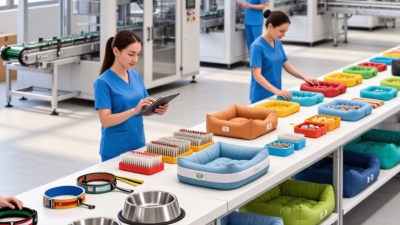
A dependable pet merchandise supplier should offer more than a polished catalogue. Ask where products are made, which materials touch pets, and how batches are tracked. Request recent product specifications, inspection records, and clear answers about quality checks. For a washable bed, confirm fabric details, seam strength, and care instructions. For a feeding accessory, ask how dimensions and materials are checked against the approved sample. Small details matter.

Compare at least three suppliers using the same questions. Review samples under ordinary conditions: wash fabric, inspect stitching, and check packaging for accurate product information. Ask about minimum order quantities, lead times, defect handling, and how the supplier reports production delays. Verify that test documents match the exact product and material, not just a similar item. Keep dated notes and sample photos. One part can feel awkward: smaller manufacturers may have less polished paperwork, but evidence should still be consistent and specific. A low quote deserves careful questions, not instant rejection. Notice how promptly the supplier responds when an answer needs checking.

How to Source Pet Merchandise in 2026: Vetting Manufacturers and Wholesale Suppliers

How to use this chart: These illustrative weights form a practical evaluation framework, not industry survey data. Prioritize product safety and compliance documentation, then assess quality consistency, landed cost, minimum order quantities and lead times, and communication and sample responsiveness. Adjust the weights to fit your products and requirements.

Verify Product Safety, Quality, and Regulatory Compliance

When sourcing pet merchandise in 2026, treat safety evidence as part of the product, not an afterthought. Ask suppliers for material specifications, recent test reports, and batch-level traceability. Check that documents match the exact item, color, and factory you intend to order. A report for a similar product is not enough.

Inspect samples with the animal’s use in mind. Tug seams on plush toys, examine chew items for sharp edges, and check whether small attachments can loosen. Look for strong chemical odors, uneven coatings, and labels that omit care instructions. Small details matter. Test products after washing or repeated handling when those actions are expected. A sample still cannot represent every production run, so arrange inspections against agreed specifications.

Rules differ by destination and product category. Confirm applicable requirements for labeling, materials, testing, and importer responsibilities with qualified compliance professionals or accredited laboratories. Keep dated records of approvals, test results, and corrective actions. A tidy certificate can create false confidence if it is outdated or incomplete. Supplier answers may also be vague; ask for evidence, then verify it independently. No checklist removes every risk, but careful documentation and follow-up make weak points easier to spot.

Compare Sourcing Costs, Logistics, and Inventory Options

Sourcing pet merchandise in 2026 means comparing the full landed cost, not just the factory price. Include product cost, samples, packaging, freight, customs charges, and warehouse handling in each quote. The American Pet Products Association’s 2025 State of the Industry report estimated U.S. pet-industry spending at $152 billion in 2024 and projected $157 billion for 2025. That signals a large market, but it does not guarantee demand for every item. A slow-selling color can still tie up cash.

Logistics choices change the calculation. Ocean freight may lower unit costs for bulky beds or litter mats, but longer transit times require earlier orders and more safety stock. Air freight suits small, urgent restocks, though it can erase the margin. Ask suppliers for minimum order quantities, production lead times, carton dimensions, and reorder terms. Compare these details using landed cost per sellable unit. Not every quote includes the same services. I still find demand harder to predict than freight.

Tips: Test a narrow range with a small order before scaling. Set reorder points using actual sales and supplier lead times. Keep a modest buffer for proven essentials, not every new design. Review slow stock monthly; even good products can linger.

How to Source Pet Merchandise in 2026? - Compare Sourcing Costs, Logistics, and Inventory Options

Product category Common sourcing regions Typical MOQ per design Indicative unit price (EXW) Typical production time Typical ocean transit to North America Logistics considerations Inventory approach
Plush toys China, Vietnam 500–1,000 pieces US$1.20–US$3.50 per piece 30–50 days About 20–40 days, port to port Lightweight but can be bulky; compare carton volume as well as unit price. Confirm material and labeling requirements for the destination market. Use a small first order to test designs; replenish proven styles in consolidated shipments.
Silicone feeders and bowls China, Vietnam 500–1,000 pieces US$2.50–US$6.50 per piece 30–45 days About 20–40 days, port to port Check food-contact documentation where applicable. Nested or stackable designs can improve carton efficiency. Hold modest safety stock for core colors; avoid broad color ranges until demand is established.
Stainless-steel bowls China, India 500–1,000 pieces US$1.80–US$5.00 per piece 25–45 days About 20–40 days, port to port Heavier than many pet accessories, so freight and handling can materially affect landed cost. Check steel grade, finish, and packaging protection. Reorder in planned batches; keep a closer watch on storage space and inventory carrying costs.
Webbing harnesses Vietnam, China, India 500–1,000 pieces per style US$3.50–US$9.00 per piece 30–50 days About 20–40 days, port to port Size and color combinations can multiply SKU counts. Request measurement tolerances and test hardware and stitching before a larger order. Start with a narrow size and color assortment; use sales data to set replenishment quantities by SKU.
Natural-rubber chew toys Thailand, Vietnam, China 500–1,000 pieces US$1.50–US$4.00 per piece 30–50 days About 20–40 days, port to port Confirm material composition, odor, durability, and relevant product-safety requirements. Shapes and packaging can affect carton utilization. Test a few shapes first and maintain buffer stock only for consistent bestsellers.
Waste-bag rolls China, India 1,000–3,000 retail packs US$0.25–US$0.80 per retail pack 20–40 days About 20–40 days, port to port Usually compact and suitable for consolidated freight. Specify bag count, dimensions, thickness, core type, and packaging clearly. Consider scheduled repeat orders for steady sellers; track packaging changes and remaining stock before reordering.

Planning notes: Price and timing ranges are indicative budgeting estimates, not supplier quotations, and can vary with materials, specifications, order size, season, and payment terms. EXW prices exclude freight, insurance, duties, taxes, inspections, and other import costs. Ocean transit times are approximate port-to-port estimates; allow extra time for pickup, customs clearance, port congestion, and final delivery. For 2026 freight budgeting, request current LCL or FCL and air-freight quotes for the actual shipment dimensions, weight, origin, and destination. Keep initial orders small where possible, then replenish based on sales and lead-time data.

Related Posts

  • 10 Compelling Reasons to Buy Pet Products Online Today

    10 Compelling Reasons to Buy Pet Products Online Today

  • What Are China Top New Pet Products for Global Buyers?

    What Are China Top New Pet Products for Global Buyers?

  • How to Choose the Best Online Pet Retailers for Your Furry Friends

    How to Choose the Best Online Pet Retailers for Your Furry Friends

  • Discover the Top 10 Unique Pet Products You Can Only Find Online

    Discover the Top 10 Unique Pet Products You Can Only Find Online

  • China Top 10 Online Pet Retailers for Global Buyers?

    China Top 10 Online Pet Retailers for Global Buyers?

  • Where to Find Top Online Pet Supply Suppliers in China?

    Where to Find Top Online Pet Supply Suppliers in China?

Blog Tags:

  • pet products wholesale
  • wholesale pet supplies
  • pet accessories wholesale
  • pet products manufacturer
  • pet supplies manufacturer
  • pet product suppliers

Copyright © 2021 Payless Pet Products - All Rights Reserved.