Nylon Turf is often praised for its resilience, realistic texture, and ability to handle demanding foot traffic. It can suit sports fields, commercial courtyards, rooftop terraces, and busy family yards. Yet choosing it should involve more than comparing blade color or showroom softness. The sub-base, drainage plan, climate, usage level, and installation quality will shape the finished result. A poorly prepared base can create puddles, uneven patches, and premature wear, even when the turf itself is premium.
Synthetic-turf consultant Tom Arico describes the principle clearly: “The best turf is the turf that fits the way people use the space.” That idea matters here. Nylon fibers usually recover well after repeated pressure and resist crushing better than many softer alternatives. They can also feel firmer underfoot, especially in hot weather or over a compacted surface. Small details matter. A playground may need shock-absorbing layers, while a decorative terrace may prioritize drainage and appearance. Neither choice is automatically correct.
There is no perfect turf.
Nylon Turf may require less mowing and watering, but it still needs brushing, debris removal, and periodic cleaning. It can also cost more initially than polyethylene or polypropylene options. Before deciding, measure daily traffic, expected lifespan, sun exposure, and maintenance capacity. Request product specifications and installation references. Walk on a sample, if possible. My own caution is simple: durability alone does not guarantee comfort, safety, or value. The right project begins with honest use requirements, realistic budgeting, and a qualified installer who can explain limitations as clearly as benefits.
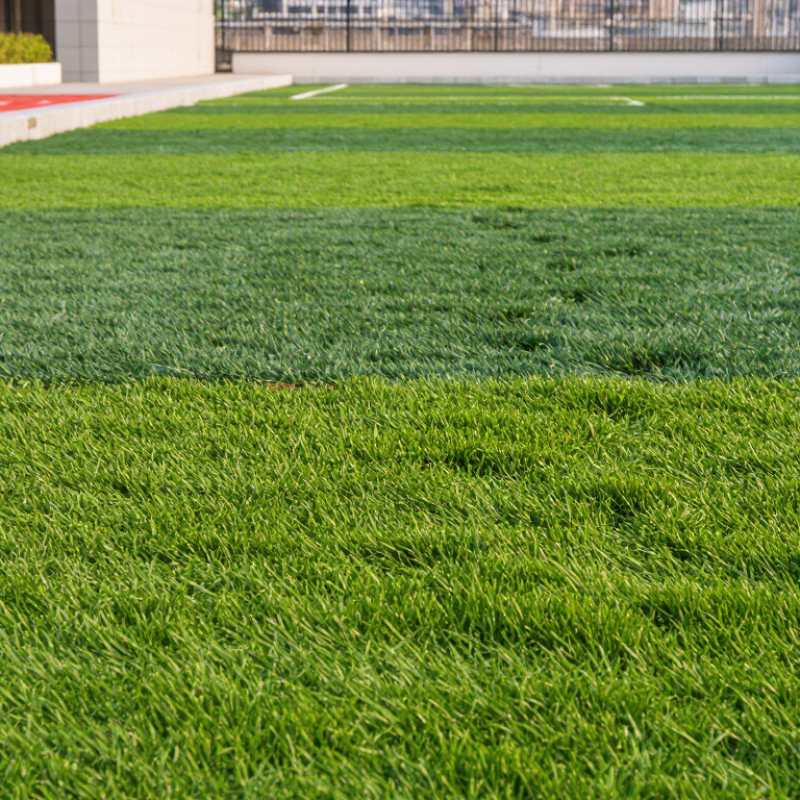
Nylon turf is a synthetic grass surface made from strong nylon fibers. These fibers imitate natural blades but resist heavy foot traffic, repeated movement, and crushing.
The material starts as nylon resin, which is heated until it becomes a thick, workable melt. Manufacturers push this melt through small openings to form thin filaments. Each filament is stretched, cooled, and shaped for strength and texture.
The finished fibers are tufted into a backing, much like thread passing through fabric. A secondary coating, often latex or polyurethane, helps hold the tufts in place. Drainage holes may be added beneath the backing, allowing rainwater to move through the surface.
During production, fibers are checked for thickness, color consistency, tensile strength, and resistance to ultraviolet exposure. Small differences can still appear.
Nylon is often chosen for sports areas, play spaces, and busy residential lawns. It has a firm feel and usually recovers well after compression. It can also tolerate substantial abrasion.
However, nylon turf may feel hotter under direct summer sunlight, especially with dark infill. It can cost more than some alternative fibers. That does not make it right for every project.
Site conditions matter more than appearance alone. A sample should be tested under expected traffic, drainage, sunlight, and maintenance routines.
We once saw a dense surface perform poorly because its base drained slowly. The fiber was not the real problem. Planning was.
Nylon turf is valued for its strength, resilience, and ability to recover from repeated pressure. Its tightly structured fibers often stand upright after foot traffic, furniture movement, and regular play. It stays upright. This makes nylon suitable for training areas, narrow walkways, and compact spaces where flattened grass looks untidy. The surface may feel firmer than softer synthetic options, so comfort depends on fiber design, infill depth, and the quality of the base beneath it.
Nylon also performs well under changing weather conditions. It resists crushing and usually keeps its shape during heavy use. In direct sunlight, however, any artificial turf can become hot. A light-colored infill, shade planning, and occasional water rinsing can improve surface comfort. Good drainage matters too. Without a properly compacted subbase, even strong nylon fibers may surround puddles, uneven spots, or shifting seams. The fiber is not the whole system.
For a residential lawn, I would inspect samples at ground level and under afternoon sun. Touch matters. A dense, springy sample may feel better than a thin one with impressive specifications. My early mistake was judging durability by fiber height alone. That assumption can be wrong. Ask how much daily traffic the area receives, whether pets will use it, and how often cleaning is practical. Nylon may cost more, but its long-term performance can justify that choice when the installation and maintenance plan are equally careful.
Nylon turf is often selected for places that receive constant foot traffic. Its strong fibers recover quickly after compression, helping busy surfaces retain a neat appearance. Sports training areas, indoor courts, and small practice fields commonly use it. It handles pressure. However, nylon can become hot under direct sunlight. A shaded design or cooling plan may be necessary.
Playgrounds and school recreation zones are another practical application. Dense nylon turf creates a consistent surface around climbing equipment and running lanes. Proper shock-absorbing layers remain essential beneath the turf. The grass alone cannot prevent serious impact injuries. Installers should inspect drainage, edge protection, and surface firmness before opening the area. Details matter.
Nylon turf also suits rooftops, balconies, event spaces, and commercial displays. Its upright texture can make compact areas feel more finished, even when natural grass cannot grow there. Pet zones may use it too, but drainage and regular cleaning require careful planning. It is easy to overstate nylon’s advantages. The material is durable, not maintenance-free. In project reviews, I would compare expected traffic, sunlight, heat, drainage, and budget before choosing it. A cheaper surface may work better in a lightly used garden, while a busy facility may justify nylon’s higher initial cost. Mistakes usually begin with ignoring daily use.
Nylon turf is dense, springy, and unusually resistant to crushing. That matters around goal mouths, walkways, and small training areas. Nylon fibers also tolerate higher temperatures better than many polyethylene surfaces. However, they usually cost more. Their firmer texture can feel less natural under bare feet.
Polyethylene remains the common choice for residential lawns because it offers softer blades and a more realistic appearance.
Polypropylene typically costs less, but it can flatten sooner under frequent traffic.
The Freedonia Group’s 2023 World Synthetic Turf report identifies landscaping and sports as major demand areas, reflecting the need for different performance levels. A 2022 life-cycle review in the journal Resources, Conservation and Recycling found that maintenance impacts, especially infill replacement and end-of-life disposal, can strongly affect synthetic turf’s environmental profile. Material selection alone does not decide sustainability.
In field inspections, nylon often makes sense where repeated foot traffic creates visible wear. It is less convincing for a large decorative yard with light use. The Synthetic Turf Council reports that synthetic fields can reduce irrigation demand substantially, but actual savings depend on climate, cleaning, and the original landscape. That caveat matters.
I would not choose nylon automatically. Its durability can justify the price, yet excessive stiffness may reduce comfort. Measure traffic, heat exposure, drainage, and maintenance needs before comparing samples. Touch the surface after direct sun exposure. Differences become obvious then.
Choosing nylon turf requires more than comparing color and pile height. Nylon fibers are highly resilient, so they recover quickly after repeated foot traffic, rolling equipment, or furniture pressure. This makes them useful for sports areas, busy courtyards, and commercial entrances. However, nylon can feel stiffer underfoot and may retain more heat in direct sunlight. Cost can also exceed other synthetic fibers.
The 2023 FIFA Quality Programme Handbook evaluates artificial fields through shock absorption, vertical deformation, ball roll, and rotational resistance tests. These measurements matter for athletic projects, not just appearance. For residential landscapes, drainage, surface temperature, and cleaning demands deserve greater attention. Grand View Research’s 2024 artificial turf market report projected approximately 6.4% annual market growth through 2030. That figure shows rising demand, but it does not prove nylon fits every application.
Ask the installer for fiber specifications, backing details, drainage capacity, and test documentation. Inspect a full-size sample outdoors. Indoor samples can hide glare and heat. Walk across it in ordinary shoes, then press a weighted object into the surface for several minutes. Check how quickly the fibers recover. Review the warranty carefully, especially for ultraviolet exposure and heavy-use areas. I would not choose nylon solely because it feels stronger. A softer fiber may perform better where children play barefoot. The weak point is often overlooked: an excellent fiber cannot correct poor sub-base preparation or blocked drainage.
Copyright © 2021 Payless Pet Products - All Rights Reserved.