Pet Attire has moved beyond novelty; global buyers now evaluate fit, function, materials, and repeat-order reliability. The American Pet Products Association’s 2025 State of the Industry report estimated 94 million U.S. households owned a pet, while U.S. pet spending reached $152 billion in 2024. These figures describe the wider pet market, not apparel sales, but they show why buyers need careful product checks. Global demand also varies by climate, culture, and intended use.
Comfort comes first. Veterinarian Dr. Marty Becker’s comfort-focused guidance offers a practical buying test: clothing should allow natural movement and should not cause distress. Fit matters. A size chart alone cannot tell you whether a coat rubs beneath the front legs or a neckline restricts turning. Check measurements, seam placement, fabric stretch, fasteners, and care instructions. Ask suppliers for sample garments and consistent grading across sizes. Then test details on real products, not just polished catalog images.
For global sourcing teams, this guide examines ten buying considerations, from material quality and sizing accuracy to supplier communication and packaging. Request clear specifications and verify them against samples. Keep records. Some choices will still miss the mark; pets differ, and markets do too. A useful buying process makes those gaps visible early, before they become costly returns or disappointed customers.
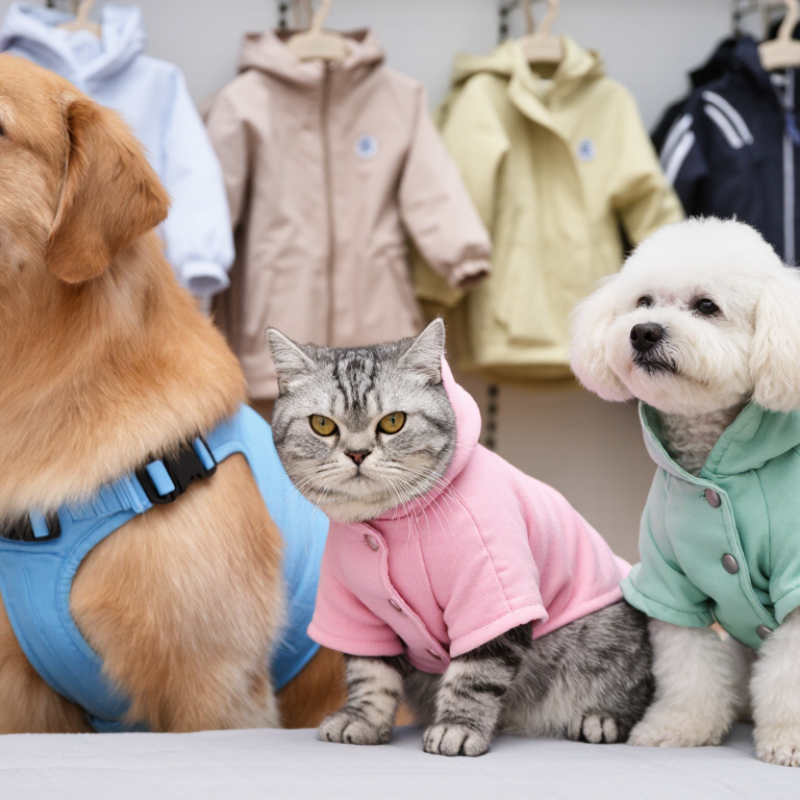
Before buying pet attire, observe how your animal moves and where they spend time. A short-coated dog walking on windy mornings may benefit from a light, well-fitted layer. A pet indoors most of the day may need no clothing at all. Consider age, coat, body shape, mobility, and sensitivity to touch. Measure the chest and neck, then compare them with the garment’s sizing chart. Sizes vary, and a label alone is not enough.
Tips: Check the local forecast and typical seasonal conditions, not just today’s temperature. Choose breathable fabric for warm, humid areas and a lightweight layer for cool, dry walks. Look for smooth seams and closures that do not press under the legs. Leave room for natural movement. Remove the garment if your pet pants heavily, scratches repeatedly, or seems reluctant to walk.
Climate is only part of the decision. A rainy route, strong indoor heating, or a pet that dislikes fabric can change what works. Try new attire briefly at home and watch for rubbing or unusual behavior. It is easy to focus on appearance; comfort is harder to judge from a photo. If your pet has a skin condition or trouble regulating temperature, ask a veterinarian before adding clothing.
A good fit starts with a soft tape, not the size label. Measure neck circumference where a collar naturally rests, chest girth at its widest point behind the front legs, and back length from the neck base to the tail base. Keep the tape close, but leave room for two fingers. Write each number down in centimeters and inches; suppliers may use either. Fit beats labels.
The American Pet Products Association’s 2023–2024 National Pet Owners Survey estimated that 86.9 million U.S. households owned a pet. That broad market includes very different body shapes, so a weight range alone is a weak sizing guide. Compare your pet’s actual measurements with the garment’s size chart, especially chest girth. If your pet falls between sizes, check the maker’s fit notes and consider adjustable closures rather than guessing.
Check the garment while your pet stands naturally. A snug chest can restrict movement; excess fabric may catch around the legs. Watch your pet walk, sit, and lie down for a minute. Does the hem ride up? Can you slide two fingers beneath the garment? Recheck measurements after a growth spurt or weight change. I would not trust a single measurement taken in a hurry; tapes slip, and pets wiggle.
Global buyers should compare fabric by climate and use, not by appearance alone. APPA’s 2023–2024 National Pet Owners Survey estimates that 66% of U.S. households own a pet, a reminder that buyer needs vary widely. A light cotton layer may feel breathable in mild weather, but it can stay damp after rain. Polyester often dries faster, though a dense lining may feel warm during active walks. Check the fabric against the intended season.
Comfort shows up at the seams. Look for smooth inner stitching, flexible panels around the shoulders, and enough room for a dog to sit without pulling. Fastenings should stay secure but should not press into the neck or belly. Avoid dangling cords and small detachable parts that pets could chew. Small details matter.
For durability, ask suppliers for test results rather than relying on fabric claims. ASTM D4966 measures textile abrasion resistance, while AATCC TM135 evaluates dimensional changes after laundering. These methods do not guarantee a garment will suit every pet, but they offer useful comparison points. Check whether seams twist after washing and whether closures still hold. A snug fit can look tidy on a hanger and still restrict movement; that is an easy mistake to miss.
| # | Buying Tip | Fabric or Construction to Consider | Comfort Check | Safety Check | Durability and Buyer Notes |
|---|---|---|---|---|---|
| 1 | Match the garment to the climate | Lightweight cotton or breathable knit for mild weather; insulated, weather-resistant layers for cold or wet conditions. | Choose a weight that suits the pet’s activity level and local temperatures. Avoid unnecessary layers in warm weather. | Check that the garment does not restrict breathing, movement, or the pet’s ability to pant. | Ask about fabric composition, lining, and intended care. Climate needs can vary substantially between destination markets. |
| 2 | Prioritize breathable materials | Open-knit or moisture-managing fabrics can help release heat; tightly coated materials may retain warmth. | Look for a soft inner surface and ventilation around areas that tend to become warm. | Stop use if the pet shows signs of overheating or distress; clothing is not a substitute for supervision in hot weather. | Review fabric specifications and care instructions rather than relying on terms such as “cooling” without supporting details. |
| 3 | Use accurate sizing measurements | Flexible panels or adjustable closures can accommodate small fit differences. | Measure the pet as directed by the seller, commonly around the chest and neck, and compare with the garment’s size chart. | The garment should not be tight around the neck, chest, or limbs, and should not drag or snag. | Request finished garment measurements and tolerances. Size labels alone may not be consistent across markets. |
| 4 | Check freedom of movement | Stretch panels and well-placed openings can improve mobility without requiring an overly loose fit. | Confirm the pet can walk, sit, lie down, and use the toilet normally while wearing the item. | Keep fabric clear of the eyes, mouth, paws, and joints; remove the garment if movement is restricted. | Inspect pattern placement and seams on a sample, especially at the shoulders, leg openings, and underarms. |
| 5 | Inspect seams and edges | Flat, smooth seams and finished edges reduce rough contact with the coat and skin. | Check the inside for scratchy labels, bulky seams, or stiff binding where the garment touches the body. | Loose threads and exposed sharp edges can catch claws or irritate skin; trim or reject poorly finished items. | Ask for seam-strength and finishing details, and inspect samples after washing to check for fraying or distortion. |
| 6 | Choose secure, practical fasteners | Well-finished hook-and-loop, snaps, or zippers may suit different garment designs and use cases. | Fasteners should be easy for a person to operate and positioned away from pressure points. | Check that small parts are firmly attached and inaccessible to chewing where possible. Supervise pets while dressed. | Test repeated opening and closing. Fastener performance can decline with dirt, moisture, and frequent laundering. |
| 7 | Evaluate decorative details | Simple designs with securely attached trims are generally easier to inspect and maintain. | Avoid decorations that add stiffness or rub against the pet’s skin. | Loose bows, beads, buttons, and similar small parts may present a chewing or swallowing hazard. Remove damaged items from use. | For bulk orders, specify attachment methods and inspect samples for loose components before approving production. |
| 8 | Consider visibility for outdoor use | Light-colored panels or reflective elements can improve visibility when illuminated, depending on placement and condition. | Reflective details should not make the garment stiff or uncomfortable. | Reflective trim does not replace a leash, supervision, or other suitable outdoor safety measures. | Ask how reflective elements are attached and whether their care instructions allow regular washing. |
| 9 | Confirm washability and color care | Materials with clear laundering instructions are easier to maintain; care needs vary by fiber, trim, and construction. | Choose garments that can be cleaned without leaving a rough or stiff surface against the coat. | Follow the care label and keep detergents and cleaning products away from pets. Ensure the garment is fully dry before reuse. | Request care-label details and test for shrinkage, color transfer, and seam changes after washing according to instructions. |
| 10 | Check quality consistency and documentation | Review fabric composition, construction details, and any material-specific documentation relevant to the destination market. | Evaluate a representative sample for softness, fit, and finishing before placing a larger order. | Ask suppliers to identify materials and components clearly; requirements and applicable rules differ by destination. | Agree on measurable specifications, inspection criteria, labeling, and packaging expectations before production. |
Pet apparel has no single global sizing chart. Measure the dog or cat directly: chest circumference behind the front legs, neck circumference, and back length from collar to tail base. Compare these measurements with the supplier’s garment chart, not just the animal’s weight. Leave room for movement; a coat should not pull across the shoulders or drag near the paws. Fit varies. APPA’s 2024 State of the Industry report recorded US pet-industry spending of $147 billion in 2023 and forecast $150.6 billion for 2024. These figures cover the wider pet sector, not clothing, but show the scale of purchasing decisions. Ask suppliers for garment measurements, grading rules, and tolerance ranges. A neat size chart can still miss a broad chest or short back.
Check labels before ordering samples in bulk. Confirm fiber content, care instructions, country-of-origin details, and required language against the destination market’s rules. ISO 3758:2023 provides standardized textile-care symbols, but it does not set pet-clothing sizes or replace local labeling requirements. Import checks matter, too: verify tariff classification, documents, and any applicable product or chemical restrictions with the destination country’s customs authority. Requirements differ by market. The National Retail Federation’s 2024 returns report projected that 16.9% of US retail sales would be returned, about $890 billion overall. This is not a pet-apparel figure, but it underlines the cost of preventable purchasing mistakes. Check a sample on a real animal before confirming a large order; one measurement method may not suit every supplier.
Before buying pet attire, check whether the seller gives a clear size chart, fabric details, and direct answers about fit. A fast reply is useful; a copied, vague answer is not. Look for recent reviews that mention stitching, actual measurements, and delivery times. One glowing review proves little.
Shipping costs can erase a bargain. Baymard Institute’s 2024 checkout research found that 48% of surveyed US shoppers had abandoned an order because extra costs, including shipping, were too high. Compare the final checkout total, not just the item price. Check tracking availability, dispatch estimates, and whether duties are included for your destination. A cheap listing can still be costly.
Read the return policy before choosing a size. The National Retail Federation’s 2024 Retail Returns report estimated that 16.9% of annual retail sales would be returned. That figure covers retail broadly, not pet clothing specifically, but it shows why return terms matter. Check the return window, who pays return postage, and whether worn or opened items qualify. Keep the packaging until the fit is tested indoors. Small detail. Policies can be confusing, and a seller’s promise in chat may not match the written terms. Save the policy and order confirmation.
Copyright © 2021 Payless Pet Products - All Rights Reserved.