What Is a Playground Set and What Types Are Available?
A Playground Set is a coordinated outdoor structure designed for children to climb, swing, slide, or play together. Its components may include a raised platform, ladder, slide, swings, or climbing wall. Some sets are compact enough for smaller yards, while others offer multiple play stations and need more room. The phrase covers many designs, not one standard layout. Looks simple. Yet the right set depends on children’s ages, available space, and how the equipment will be used.
Common types include swing sets, playhouses, climbing frames, and combination sets that bring several activities together. Materials also vary: wood can create a natural look, while metal and molded plastic offer different upkeep needs and design options. Before choosing, measure the play area and leave clear space around the equipment. Check the manufacturer’s age guidance, installation instructions, and recommended surface. A stable, suitable surface matters, especially beneath swings and slides. Regular checks for loose fasteners, worn ropes, splinters, or cracks can help identify problems early. These details are easy to overlook when a bright slide catches a child’s eye. I’d also think about how the set may fit children as they grow; a small model can feel limiting sooner than expected. No single type suits every yard or family, so comparing features with real space and maintenance needs is a sensible starting point.
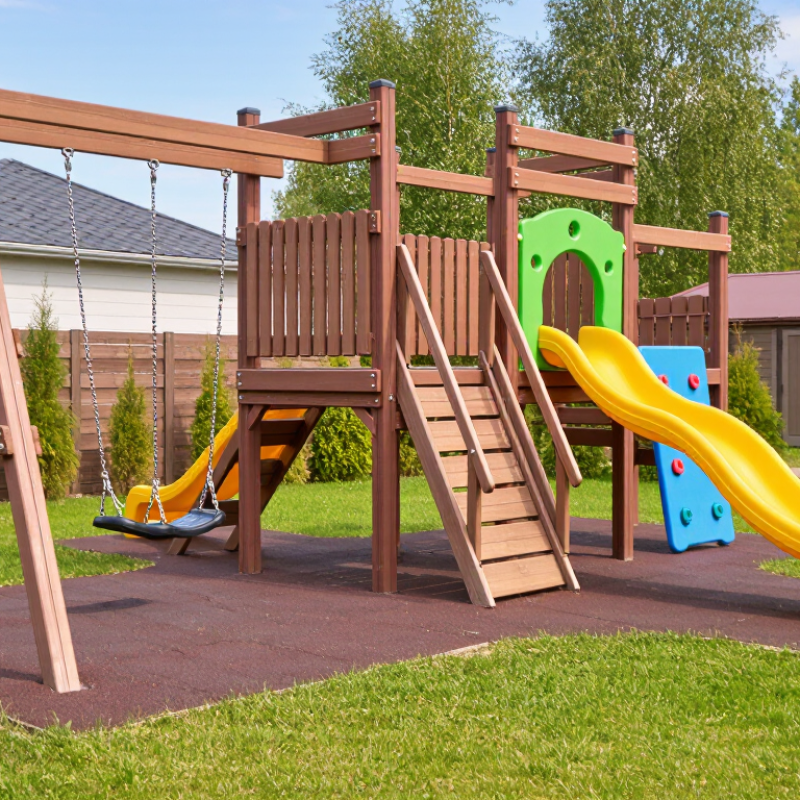
What Defines a Playground Set? Core Components and ASTM F1487 Scope
What Is a Playground Set and What Types Are Available?
A playground set is a connected group of equipment designed for active play. Common components include platforms, steps or ladders, slides, swings, and climbing or balancing features. Not every set includes all of them. A low platform with a short slide serves younger children differently from a taller structure with overhead climbing bars. Protective surfacing and clear use zones are also vital parts of the play area, even though they are not equipment components.
ASTM F1487 covers public-use playground equipment intended for children ages 2 through 12. It sets performance requirements for features such as openings, barriers, entrapment risks, and structural integrity. It does not cover every playground surface or site condition; surfacing is addressed by separate standards. The U.S. Consumer Product Safety Commission’s Public Playground Safety Handbook reports roughly 200,000 emergency-department-treated playground injuries among children each year. Falls are a major concern. That figure makes equipment height, surfacing, and layout practical safety questions—not paperwork.
A set should be evaluated as an installed arrangement, not just as separate products on a plan. Check whether children can move between platforms without awkward gaps, and whether swing paths remain clear of traffic. A tidy drawing can still miss a cramped landing zone. ASTM guidance helps define equipment expectations, but local inspection and maintenance matter too; worn connectors and loose surfacing can change how a set performs over time.
What Is a Playground Set? Common Components and ASTM F1487 Scope
A playground set combines equipment for activities such as climbing, sliding, swinging, and balancing. ASTM F1487 addresses public playground equipment intended for children ages 2 through 12; it excludes home-use playground equipment, sports equipment, and amusement rides.
The chart classifies examples by scope: 1 means within scope and 0 means excluded. ASTM F1487 sets safety and performance requirements; it does not require every playground set to include every listed component.
How Residential and Public Playground Sets Differ in Design and Use
A playground set combines equipment such as swings, slides, climbing features, and platforms into one play area. Residential sets are usually sized for a yard and a small group of children. Their designs may use compact frames, shorter slides, and fewer play stations. A caregiver can often see the whole structure from a nearby patio or window. Still, a tidy layout does not guarantee safe use. Check the available space, surface, and children’s ages before choosing equipment.
Public playground sets serve more children, often across a wider age range. They typically need durable materials, accessible routes, clear circulation, and impact-absorbing surfacing suited to the site. Separate play zones can reduce crowding between toddlers and older children. Design also has to account for frequent use, routine inspections, and repairs. That takes planning. Public equipment may look similar to a backyard set, yet its scale and maintenance needs are different. Even a well-considered layout can miss a blind spot or bottleneck, so observe how children actually move through the space after installation.
Which Set Types Suit CPSC Age Groups: 6–23 Months, 2–5, and 5–12 Years?
For children aged 6–23 months, choose compact infant-toddler sets with low platforms, short ramps, crawl-through panels, and full-body bucket seats. CPSC’s Public Playground Safety Handbook separates equipment by age because balance, reach, and coordination change quickly. Keep steps broad and close together. Toddlers need close caregiver supervision, not taller slides.
For ages 2–5, preschool sets can add low slides, small climbing structures, spring riders, and imaginative play panels. CPSC guidance recommends distinct play areas for younger and older children, since preschoolers may not judge speed or distance well. A clear sightline matters. Check that openings do not create head or neck entrapment hazards, and use impact-absorbing surfacing beneath equipment. CDC has cited more than 200,000 annual U.S. emergency-room visits for playground-related injuries among children 14 and younger; that figure is a reminder, not a prediction for any one set.
For ages 5–12, larger multi-activity sets may include overhead ladders, higher slides, and more challenging climbers. These suit stronger coordination and upper-body skills, but equipment height and fall zones need careful review. Match the set to the youngest regular users, not just the oldest. CPSC’s age-group guidance is useful, though real children do not develop on a fixed timetable. A child’s confidence can outpace their judgment.
How Wood, Metal, and Plastic Affect Durability and Maintenance
A playground set combines equipment such as swings, slides, and climbing features into one play area. Its frame may be wood, metal, plastic, or a mix. Material choice affects more than appearance; it changes how the set responds to weather, frequent use, and routine care.
Wood has a natural look and can feel sturdy, but moisture may lead to splintering, rot, or loose joints over time. Check surfaces for rough spots and inspect fasteners, especially after wet seasons. Wood needs attention.
Metal frames are often durable, though chipped coatings can expose areas to rust. In sunny weather, metal slides and handles may also become hot, so shade and touch checks matter.
Plastic parts resist rust and usually need only washing, but prolonged sun can cause fading or brittleness. They are not maintenance-free.
A useful inspection is hands-on: press gently on rails, look beneath platforms, and check swing connections for wear. Clean dirt from corners where water can collect. Follow the maker’s care instructions, since finishes and materials differ.
It is tempting to judge a set by its strongest-looking part, but the small pieces matter too. A solid frame cannot compensate for a cracked slide or a worn connector.
How ASTM F1292 Surfacing Ratings Match a Set’s Critical Fall Height
A playground set’s critical fall height is the greatest fall height its surfacing is tested to protect against under ASTM F1292. Compare that rating with the equipment’s highest designated play surface, not just its overall height. A climbing platform may sit well above the surrounding ground. That difference matters.
For example, if a structure’s fall height is six feet, the surfacing should have an ASTM F1292 critical fall height of at least six feet. Check test documentation for the specific material and installed depth; a loose-fill product tested at one depth may not provide the same protection when spread more thinly. Installation details count.
Compaction, displacement, age, and wet or frozen conditions can also affect performance. I would not treat a rating label as a guarantee. It describes tested performance, not every real-world landing. Inspect high-traffic spots under swings and at slide exits, where material often shifts. Replace or redistribute surfacing when depth falls below the documented requirement, and keep records of checks. Even careful maintenance cannot remove every risk, but matching the tested rating to the set’s fall height is a practical, verifiable starting point.