7 Tips for Choosing a Customized Menstrual Cup
Choosing a Customized Menstrual Cup begins with understanding your body, not chasing a perfect product. Cup fit can depend on comfort, cervix height, menstrual flow, and how sensitive you are to pressure. A cup that works well for a friend may feel awkward for you. That is normal. “Customized” can mean choosing from different sizes, shapes, firmness levels, and stem designs; it does not always mean a cup is individually made. Check the manufacturer’s sizing guidance and materials before buying. Small details matter, such as whether the rim feels comfortable or the stem rubs during movement.
These 7 tips will help you compare options with care. Consider how capacity matches your flow, whether the cup is easy to reach, and how its firmness feels during insertion and removal. Think about your routine, too: a long commute or limited access to a private sink can affect what feels practical. No feature guarantees a leak-free or comfortable experience, and finding a good fit may take patience. A short trial can reveal useful clues, but discomfort is worth taking seriously. Follow the product’s cleaning and wear instructions, and ask a qualified healthcare professional if you have persistent pain, unusual symptoms, or questions about whether internal menstrual products are suitable for you. The best choice is the one that fits your needs safely—not someone else’s checklist.
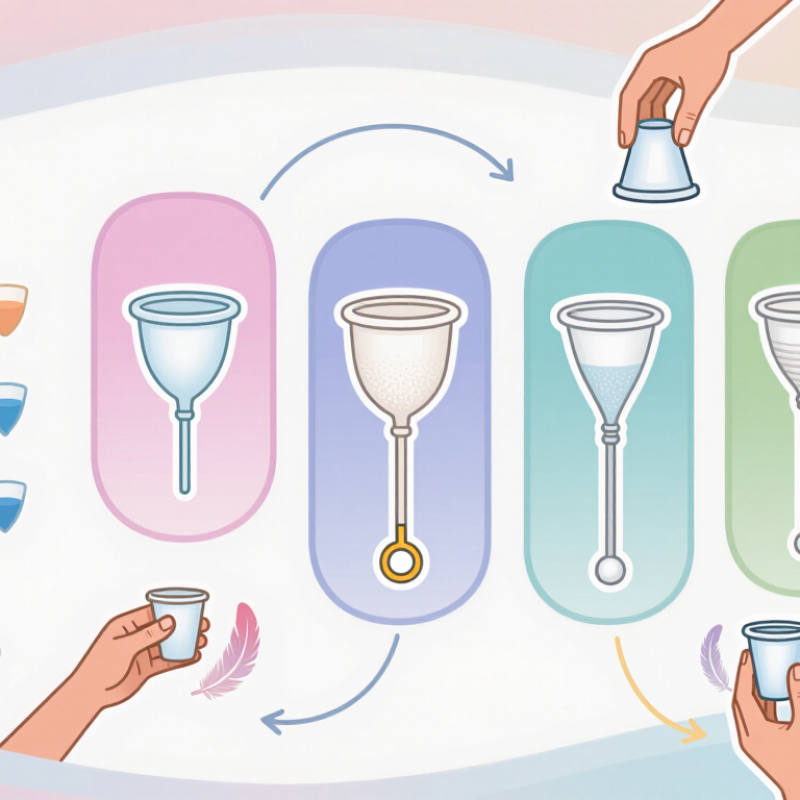
Assess Your Menstrual Needs and Reasons for Choosing a Custom Cup
Before choosing a customized menstrual cup, note what your periods are actually like. Track flow across several cycles, including heavier days, overnight changes, and any leaks. A few notes in your phone can be more useful than guessing from memory. Also consider your cervix height, comfort with insertion, and activities such as swimming or exercise. These details may help you compare cup length, capacity, and firmness.
Tip: Write down your main reason for wanting a custom fit. Is a standard cup uncomfortable, difficult to position, or prone to leaking? Be specific. “It slips during a long walk” gives more useful information than “It feels wrong.” Age or childbirth history alone cannot determine the best fit. Bodies vary, and they change over time.
Ask how a custom cup’s dimensions and materials are selected, and check that its care instructions are clear. A cup should not cause sharp pain. If discomfort continues, stop using it and seek advice from a qualified healthcare professional. Sudden changes in bleeding, severe pain, or unusual symptoms also deserve medical attention. Customization may improve comfort, but it cannot guarantee a perfect fit; that uncertainty is worth keeping in mind.
Compare Cup Materials, Shapes, Sizes, and Firmness Options
A customized menstrual cup should match your body, flow, and comfort preferences. Medical-grade silicone is flexible and widely used; some cups use other body-safe materials. Check the care instructions and replace a cup if it becomes damaged. Shape matters, too. A rounded cup may feel different from a longer, narrower one, especially if your cervix sits low. Fit varies.
Tip 1: Compare the cup’s length and width with your own comfort needs, not only with a size label. Tip 2: Consider the rim and body shape. A firmer rim may open more easily, while a softer cup may feel gentler for some people. Too soft can be tricky to unfold. Bodies change.
Size guides often use age, birth history, or flow, but these are rough starting points. Flow alone does not determine fit. If the cup leaks, feels uncomfortable, or is difficult to remove, review its position and size rather than assuming you chose badly. Tip 3: Think about firmness alongside shape; a cup that works during exercise may feel too noticeable at rest. Wash your hands before insertion and follow the cup’s cleaning directions. Persistent pain or irritation deserves medical advice. Finding a comfortable option can take adjustment, and sometimes the first choice is not quite right.
Match Cup Dimensions to Your Anatomy and Menstrual Flow
Choosing a menstrual cup is not just a matter of selecting “small” or “large.” Cup length, rim width, and capacity all affect comfort. A low cervix may need a shorter cup, while a higher cervix can make a longer cup easier to reach. Your body can also change over time, so an old measurement may not tell the whole story.
Tip 1: Check your cervix height during your period, when it may sit lower. With clean hands, feel for the firm, rounded cervix and note how far your finger travels. Compare that measurement with the cup’s total length, including the stem. A size chart can look exact, but it cannot capture every body. Don’t force a cup that presses or causes pain.
Tip 2: Match capacity to your flow, not your anatomy. On heavy days, a higher-capacity cup may mean fewer changes; on light days, a smaller capacity may be enough. Keep track of how quickly your cup fills for a few cycles. That evidence is more useful than guessing from pad use alone. Fit takes patience. If leaking continues, check whether the cup opens fully and sits comfortably. Persistent pain or difficulty removing it is a good reason to ask a healthcare professional for guidance.
Menstrual Blood Loss: Reference Points for Cup Planning
Understanding cycle-level blood-loss references can help you think about capacity alongside fit and comfort.
A commonly cited reference range for menstrual blood loss is about 5–80 mL per cycle; more than 80 mL has traditionally been used as a heavy-bleeding threshold. These figures describe total cycle blood loss, not the capacity a cup must hold at once. Cup capacity needs depend on how often you empty it, while cup length and width should be chosen for your anatomy and comfort. Heavy bleeding that concerns you is worth discussing with a healthcare professional.
Check Safety Standards, Care Requirements, and Product Support
Customization can make a menstrual cup feel more suitable, but it should never obscure basic safety. Ask what the cup is made from and whether the maker can share material and biocompatibility testing documents. Check that it meets relevant safety standards for your location. Vague phrases like “body-safe” are not evidence. If custom sizing or colors are offered, ask whether those changes affect testing or product integrity. Keep the answer in writing. Clear records matter. A questionnaire alone cannot promise an exact fit.
Care instructions should be specific and consistent with the cup’s material. Look for directions on washing between uses, sterilizing between cycles, and storing the cup. Check what to do if it becomes sticky, cracked, or unusually discolored. Follow the recommended cleaning method; harsh cleaners or improvised heating may damage some materials. Support matters after checkout. Before ordering, check whether staff can answer questions about sizing, insertion, removal, or irritation. Make sure return terms and replacement guidance are easy to find. Ask how personal measurements are stored and who can access them. Support cannot diagnose pain. If discomfort continues, stop using the cup and consult a qualified health professional. That may feel inconvenient, but guessing is not a good care plan.