2026 Top PVC Cooler Bag Suppliers for Global Buyers
The global demand for practical cold-chain accessories is becoming more selective. Buyers now examine insulation, stitching, leakage resistance, and material transparency before placing large orders. A reliable Pvc Cooler Bag supplier must provide more than attractive colors and low factory prices. It must show repeatable production, traceable materials, and realistic delivery capacity.
Grand View Research reports that the global cooler market is expanding steadily, supported by outdoor recreation, food delivery, and portable storage demand. Fortune Business Insights also identifies convenience, mobility, and temperature protection as important market drivers. These findings suggest strong opportunities for Pvc Cooler Bag manufacturers in 2026. However, market growth does not guarantee product quality. A sample may look strong while its zipper fails after repeated opening. That detail matters.
Patrick Thomas, former Covestro chief executive and a recognized plastics industry leader, said, “Plastics are too valuable to be thrown away.” His statement adds a useful test for supplier evaluation. Can the factory explain its PVC formulation, production waste controls, and product-life expectations? Can it support responsible packaging and documented quality checks?
This guide reviews leading Pvc Cooler Bag suppliers for global buyers. It considers factory experience, customization ability, quality systems, production scale, and export communication. Reports and certifications can improve confidence, but they are not perfect proof. Buyers should still inspect samples, request test records, and confirm specifications in writing. A supplier ranking is helpful, yet careful verification remains necessary.
What PVC Cooler Bags Are and Why Global Buyers Choose Them
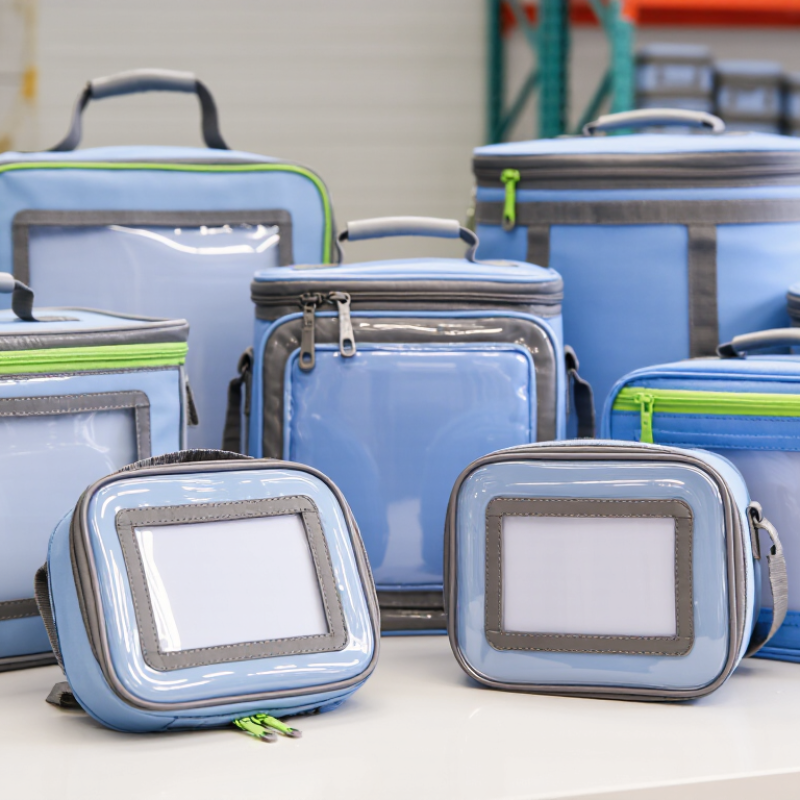
PVC cooler bags are flexible insulated carriers made with a PVC outer layer, thermal lining, zipper, handles, and sealed seams. The PVC surface resists light moisture, dirt, and daily abrasion. Inside, foam insulation slows temperature change during transport or outdoor use. They are not refrigerators. Their performance depends on insulation thickness, closure quality, load size, and surrounding heat.
Global buyers often choose them because they are lightweight, easy to clean, and simple to customize. A supplier can produce different shapes, capacities, colors, and handle designs for retail, catering, travel, or promotional programs. In practical sourcing, inspect stitching, zipper movement, lining attachment, odor, and surface consistency. Small defects can become larger problems after repeated folding. Request sample testing with ice packs and a fixed load for several hours. Record the starting temperature, storage position, and room conditions. Results vary, but the comparison is useful.
PVC also supports efficient large-volume production, which may help control unit costs. However, a low quotation can hide thin insulation, weak hardware, or inconsistent finishing. Buyers should check material documentation and product safety requirements for the destination market. They should also confirm packaging, carton strength, production capacity, and inspection procedures. A visually attractive sample is not enough. I have seen good-looking bags perform poorly when the zipper leaves small gaps. Honest evaluation requires testing the details, not trusting appearance alone.
Key Features to Compare When Selecting a PVC Cooler Bag Supplier
When comparing PVC cooler bag suppliers in 2026, global buyers should inspect more than catalog photos. Ask for PVC thickness, insulation type, seam construction, and zipper performance. A clear specification sheet shows whether the supplier understands real usage. Check temperature retention with test data, not broad promises. A bag that looks sturdy may fail after repeated folding.
Supplier reliability also matters. Review factory experience, production capacity, sample accuracy, and quality-control procedures. Request pre-shipment inspection records and material declarations for PVC, inks, and adhesives. Suppliers should explain applicable packaging, chemical, and product-safety requirements for your target markets. Confirm their ability to manage custom sizes, printed artwork, carton labels, and delivery schedules. One overlooked detail is replacement handling. Ask what happens when samples pass, but bulk goods do not. That answer can reveal more than a polished presentation.
Tips: Compare three suppliers using the same checklist. Test a sample with ice packs, a leaking bottle, and a loaded lunch container. Inspect the inner lining, handle stitching, odor, and zipper alignment. Record results with photos. Do not choose only by price. A cheaper bag can create higher return costs. I would also leave room for doubt: supplier documents may be accurate, yet production teams can change. Repeat inspections before larger orders.
2026 Top PVC Cooler Bag Suppliers for Global Buyers
Key features to compare when selecting a PVC cooler bag supplier
This 100-point procurement scorecard reflects the main factors global buyers typically evaluate: insulation performance, material compliance, leak resistance, construction durability, order flexibility, delivery reliability, and customization capability. Higher values indicate greater importance during supplier comparison.
How to Evaluate PVC Cooler Bag Materials, Quality, and Safety
When comparing PVC cooler bag suppliers, inspect the material rather than relying on a thickness claim alone. Ask for the PVC specification, backing details, and information about intended temperature conditions. A sample should bend without whitening or cracking, with an even surface and no tacky feel. A strong plastic odor deserves investigation, though smell alone cannot prove a material is unsafe. Small details matter.
Check the seams, zipper ends, and handle attachments under load. These spots often fail before the broad panels do. Pour a little water inside the sample and look for leakage around stitched areas. Then test the bag with chilled contents for several hours; insulation performance depends on the full construction, not PVC alone. That check is useful, but imperfect.
For safety, request material declarations and relevant test reports for the bag’s intended use, especially for any inner layer that may touch food or ice. Confirm that documents identify the tested material and match the production item, not merely a similar sample. Ask how the supplier controls changes between batches. Paperwork helps, but it is not a substitute for checking a production sample. Evaluate sharp edges, loose threads, and any coating that peels after repeated folding.
Supplier Selection Criteria for Custom Designs and Bulk Orders
Choosing a PVC cooler bag supplier for custom designs starts with material details, not a catalog photo. Ask for the PVC thickness, lining type, seam construction, and insulation test method. A sample should hold ice packs without leaking after repeated handling. Check the zipper, handle stitching, and stress points with a filled bag. Small flaws show up quickly.
Customization needs clear limits. Confirm available bag dimensions, print area, color matching, and artwork file requirements before approving production. Request a pre-production sample with the actual material and printing method. A digital proof cannot reveal how ink looks on textured PVC. It happens. Also ask how the supplier checks color variation across a bulk run, since samples and finished goods may differ slightly.
For large orders, compare minimum quantities, production timelines, packaging details, and inspection procedures in writing. Ask whether the quoted price includes sample fees, custom tooling, and shipping preparation. Request recent quality records or a documented inspection checklist, rather than relying only on verbal assurances. Communication matters too. A supplier that answers technical questions clearly can help prevent costly revisions, though no process removes every risk. Leave time for one correction round; buyers often underestimate it.