What Are the Best Aquarium Products from China?
Choosing the best Aquarium Products from China requires more than comparing prices or polished online photographs. Quality can vary between factories, even within the same product category. A quiet filter, a reliable heater, and safe lighting can protect fish every day. Poor materials can do the opposite. I have seen small details matter: a loose suction cup, a noisy impeller, or a cable seal that feels weak. These details deserve attention.
Aquatic veterinarian Dr. Jessie Sanders explains, “Good aquarium care begins with stable water quality, not expensive equipment.” Her point offers a useful standard for evaluating Chinese Aquarium Products. A strong product should support stable temperature, clean water, safe circulation, and simple maintenance. Buyers should check material specifications, electrical certifications, warranty terms, replacement parts, and factory testing records. Products made from aquarium-safe glass, food-grade plastics, and corrosion-resistant metals are more promising. Clear instructions matter too.
This guide will examine filters, tanks, heaters, LED lights, air pumps, decorations, and automatic feeders. It will consider performance, durability, design, energy use, and value. Some products may look impressive but perform poorly after several months. Others may appear plain yet work reliably for years. That contrast is easy to miss. My evaluation will not be perfect, because long-term results depend on water chemistry, installation, and maintenance. Still, practical evidence can reveal useful patterns. Responsible sourcing also matters. Buyers should choose lawful, traceable products and avoid unsafe materials or unsupported claims. The best choice is not always the cheapest one. It is the product that quietly keeps aquatic life healthier.
What Makes Chinese Aquarium Products Competitive?
Chinese aquarium products remain competitive because manufacturers combine scale, flexible production, and dense supplier networks. The APPA 2023–2024 National Pet Owners Survey reports 10.5 million U.S. households keeping freshwater fish. This demand rewards reliable, affordable equipment.
Factories can source pumps, LED modules, glass, plastics, and packaging within nearby industrial clusters. That reduces transport time and supports smaller production runs. Buyers can also request specific wattage, cable lengths, tank sizes, or packaging languages. Competitive pricing is not only about cheaper labor. It often reflects shared tooling and high-volume component purchasing. Mordor Intelligence’s Aquarium Market report projects continued global growth through 2030, creating pressure for suppliers to improve efficiency and product variety.
Quality still needs careful verification. A filter may look polished but produce excessive vibration after several hours. Ask for flow-rate tests, noise readings, electrical safety documents, and corrosion checks. Request samples before placing a large order. Check whether stated flow rates were measured with clean media, because real performance usually drops. This is an easy detail to miss. The weakness is inconsistency between factories. One supplier may deliver excellent silicone seals, while another uses weaker plastic and identical photographs. Independent inspection, batch records, and clear warranty terms make Chinese sourcing more dependable. Supplier audits should examine water-contact materials, packaging damage, and replacement-part availability, not only the factory showroom.
What Makes Chinese Aquarium Products Competitive?
Comparative industry benchmark based on widely observed manufacturing strengths in China’s aquarium supply chain.
The index uses a five-point comparative scale, where 5 represents a strong competitive advantage. China’s aquarium manufacturing ecosystem is especially competitive in production scale, component integration, customization, and export fulfillment.
Which Aquarium Product Categories Are Made in China?
China produces a broad range of aquarium products, from glass tanks to small maintenance tools. Standard aquariums often use clear float glass, low-iron glass, or reinforced panels. Custom factories can also manufacture rimless tanks, cabinet systems, and acrylic breeding boxes. Sizes range from desktop containers to large home displays.
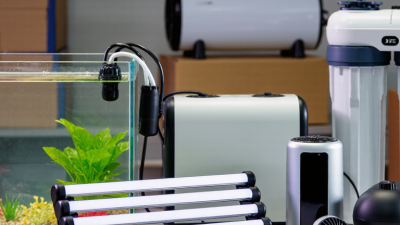
Filtration is another major category. Chinese manufacturers produce sponge filters, hang-on-back units, canister filters, filter media, air pumps, and water circulation pumps. Many factories also make LED aquarium lights with adjustable brightness and programmable timers. Buyers should check heat control, electrical safety documentation, noise levels, and replacement-part availability. A low purchase price can hide weak seals or difficult repairs.
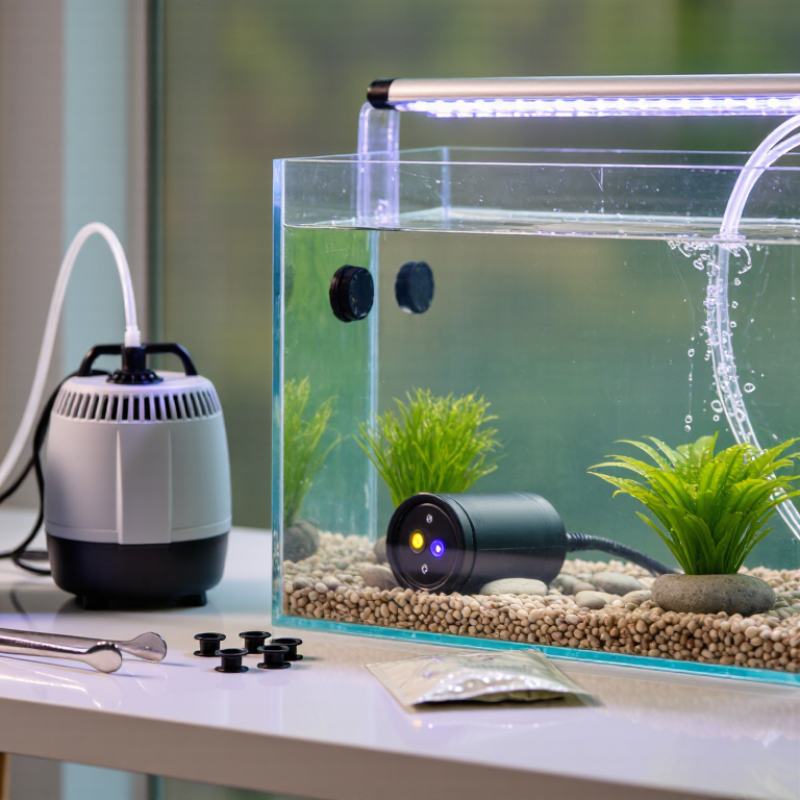
Aquascaping supplies are widely available as well. These include planted-tank substrates, ceramic media, driftwood, artificial rocks, tweezers, trimming scissors, CO2 accessories, and magnetic glass cleaners. Fish nets, feeding tools, thermometers, heaters, and water-testing equipment are also common. In sourcing work, I would request samples before placing a large order. Packaging matters, especially for fragile glass and ceramic items. Product photos can look excellent, yet real finishes may vary slightly. That deserves honest checking. Suppliers with clear inspection records, consistent measurements, and traceable materials are usually easier to trust. Some smaller workshops offer useful customization, but their quality control may depend heavily on one technician. Not perfect. Verify every detail.
How to Evaluate Quality, Safety, and Compatibility
Choosing aquarium products from China requires more than comparing prices.
Quality begins with material traceability, electrical safety, and stable performance in water.
The American Pet Products Association reported that
10.7 million U.S. households kept freshwater fish in 2023–2024.
That large user base increases demand for reliable filters, heaters, pumps, and lighting. However, product descriptions can remain vague. Ask for test reports, batch numbers, and clear material specifications.
Safety deserves practical testing.
For heaters and pumps, check voltage, plug type, insulation, and overheating protection.
Look for compliance evidence related to applicable electrical standards, not only a printed logo. The U.S. Environmental Protection Agency warns that poor water quality can harm aquatic life through toxic chemicals and oxygen imbalance. Product materials should resist corrosion and avoid unsafe coatings. Glass thickness, silicone curing, and leak testing also matter.
A beautiful tank is still a failure if the bottom seam slowly leaks.
Tips:
Request a sample before placing a large order. Run pumps in a separate container for 48 hours. Measure noise, temperature, flow, and unusual odor. Compare claimed flow rates with real measurements. Compatibility is often overlooked; a strong pump may stress small fish or disturb plants. Check replacement parts and warranty terms in writing.
I have found that “universal” fittings are rarely universal.
Some evaluations also miss long-term aging, so repeat testing after several weeks. Cite the APPA 2023–2024 National Pet Owners Survey, EPA aquarium water-quality guidance, and relevant electrical safety standards when documenting supplier claims.
How to Choose Reliable Chinese Aquarium Suppliers
What Are the Best Aquarium Products from China?
Reliable Chinese aquarium suppliers should offer more than attractive prices. APPA’s 2023–2024 National Pet Owners Survey reports 11.1 million U.S. households keep freshwater fish. This demand makes consistent quality essential, especially for filters, lighting, heaters, and glass tanks.
Request product specifications before negotiating. Check glass thickness, pump flow, noise levels, power requirements, and material safety documents. For electrical products, ask for test reports matching your destination market. Verify certificates with the issuing body. A scanned logo proves little.
Order samples from the same production line used for bulk orders. I would test a filter for at least 72 hours, measuring flow after sponge loading. Inspect silicone seams under bright light. Small bubbles can become leaks. That mistake is expensive.
A dependable supplier should explain its quality-control process clearly. Ask how it records incoming materials, assembly checks, failure rates, and batch numbers. Supplier audits also matter. Review factory photos, but do not rely on photos alone. Arrange a video inspection or use an independent auditor.
The China Aquarium Industry Association has repeatedly emphasized standardization and quality improvement across aquatic equipment manufacturing. Still, industry statements are not a substitute for evidence. Compare three suppliers using the same checklist. Check response time, replacement terms, packaging strength, and spare-part availability.
Price is only one variable. A cheaper heater with unstable temperature control may create customer complaints and livestock losses. I once trusted a polished sample too quickly. That judgment needed more testing. Reliable sourcing is slower, but usually less costly.
What Certifications and After-Sales Support Should Buyers Check?
Choosing aquarium products from China requires more than comparing prices and specifications. The APPA 2023–2024 National Pet Owners Survey reports that 10.5 million U.S. households keep freshwater fish, while 2.2 million keep saltwater fish. This demand makes supplier quality control especially important. Buyers should request current certificates matching the exact model, not a similar product. Check CE or UKCA requirements for the destination market, plus RoHS documentation for restricted substances. For electrical equipment, ask whether testing follows relevant IEC safety standards. ISO 9001 can indicate process control, but it does not prove product safety.
Verify every certificate through the issuing laboratory or certification body. Review the report number, factory address, testing date, product photographs, and covered voltage range. A certificate without traceable model information is weak evidence. Ask for water-resistance test results, thermal protection details, and batch inspection records. Aquarium equipment operates near water every day. Small design failures can become expensive quickly.
After-sales support deserves equal attention. Confirm the warranty period, replacement procedure, spare-parts availability, and response time in writing. Reliable suppliers should provide wiring diagrams, multilingual manuals, and troubleshooting videos. Ask whether pumps, seals, sensors, and power adapters remain available for two to five years. That promise should be written into the purchase agreement. In practice, many buyers focus too heavily on certification and overlook service capacity. That is a mistake. A perfect test report cannot repair a failed heater when no replacement part exists. APPA’s survey also shows a large user base, but it does not measure product reliability, so buyers still need independent samples and pre-shipment inspections.