Payless Pet Products

Payless Pet ProductsPayless Pet ProductsPayless Pet ProductsPayless Pet Products
  • Home
  • New Website
  • Fish Amoxi Forte 500mg
  • Fish Aug 625mg
  • Fish Cipro Forte
  • Fish Clinda Forte
  • Fish Doxy
  • Fish Fluco Forte
  • Fish Itra
  • Fish Keto
  • Fish Levo 500mg
  • Fish Zithro 250mg
  • Fish Zithro 500mg
  • Fish Zithro 1000mg

Payless Pet Products

Payless Pet ProductsPayless Pet ProductsPayless Pet Products
  • Home
  • New Website
  • Fish Amoxi Forte 500mg
  • Fish Aug 625mg
  • Fish Cipro Forte
  • Fish Clinda Forte
  • Fish Doxy
  • Fish Fluco Forte
  • Fish Itra
  • Fish Keto
  • Fish Levo 500mg
  • Fish Zithro 250mg
  • Fish Zithro 500mg
  • Fish Zithro 1000mg
Why Choose Bathroom Hardware for Global Projects?

Why Choose Bathroom Hardware for Global Projects?

Choosing Bathroom Hardware for global projects involves more than selecting attractive taps, handles, or shower fittings. It requires dependable performance across different climates, building standards, installation methods, and maintenance conditions. A fitting used in a coastal hotel may face salt-heavy air, while one installed in a city apartment may endure hard water and frequent daily use. These details shape every specification.

Experienced project teams examine material quality, surface treatment, water resistance, spare-part availability, and installation support. Stainless steel grades, brass composition, cartridge durability, and coating consistency can influence long-term results. Clear technical drawings also reduce confusion between architects, contractors, and local installers. Reliable suppliers should provide test documentation, transparent warranty terms, and responsive communication throughout procurement and installation. Claims should be checked carefully.

Small details matter.

Global projects rarely follow a perfect path. Shipping delays happen. Local workmanship may vary. Even a well-designed product can perform poorly when instructions are unclear or replacement parts are unavailable. This is why Bathroom Hardware should be evaluated as part of a complete project system, not as an isolated decorative purchase. Practical experience, tested specifications, and honest risk assessment help teams make safer decisions. The strongest choice may not be the cheapest or the most fashionable. It is often the product that remains functional, repairable, and visually consistent after years of real use. That standard deserves careful review.
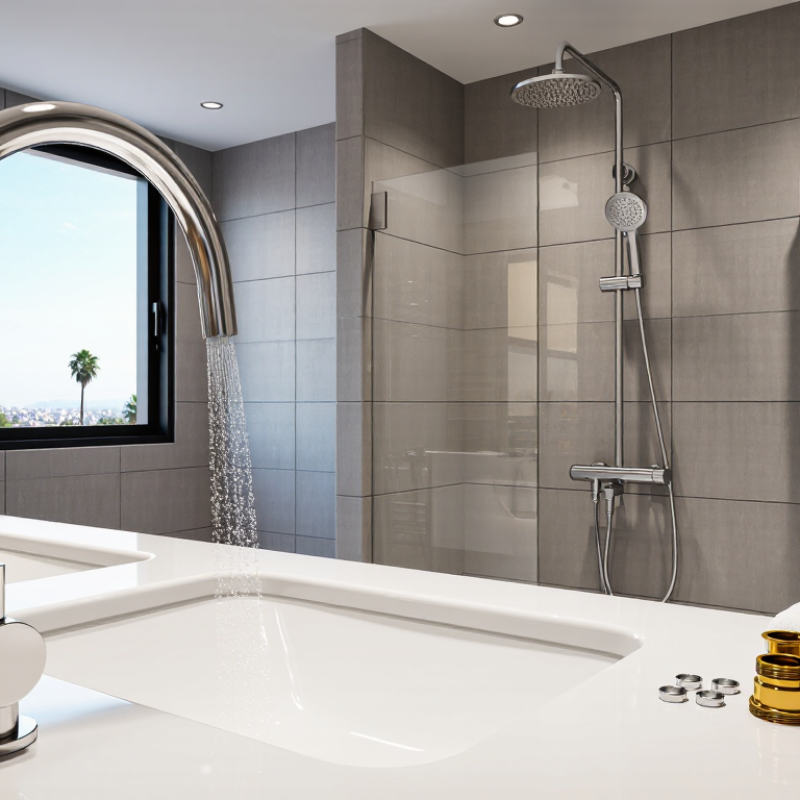
Why Choose Bathroom Hardware for Global Projects?
Table of Contents [Hide]
1 What Bathroom Hardware Includes and Why It Matters in Global Projects
2 How Quality Hardware Supports Safety, Durability, and Daily Use
3 Which Standards and Certifications Global Projects Must Consider
4 How Design, Materials, and Compatibility Affect Product Selection
5 How Suppliers Simplify Sourcing, Installation, and Long-Term Maintenance

What Bathroom Hardware Includes and Why It Matters in Global Projects

Bathroom hardware covers far more than visible taps and towel bars. It includes faucets, shower sets, drains, valves, hinges, handles, shelves, mirrors, and mounting systems. Each part affects daily use, installation time, and long-term maintenance. A basin mixer must match local water pressure and connection sizes. A shower valve must control temperature safely. Drain covers need suitable flow rates and corrosion resistance.

Global projects add another layer of difficulty. Bathrooms may face hard water, coastal humidity, limited maintenance access, or different building standards. Finishes should resist staining and repeated cleaning.

Fixings must suit the wall structure, not just the product drawing. Clear installation guides reduce mistakes across language barriers. Spare cartridges, seals, and compatible fasteners also matter when replacements travel long distances.

Small details matter greatly. A loose hinge can damage a door within months. A poorly chosen drain can leave water around a shower base. A beautiful finish may fail in a humid coastal hotel. That is an uncomfortable lesson. Specifications often focus on appearance first. They should test function, serviceability, and local compatibility earlier. Reliable hardware supports contractors, facility teams, and users through many years of daily contact. It should be practical, traceable, and checked against project requirements before purchase.

How Quality Hardware Supports Safety, Durability, and Daily Use

Why Choose Bathroom Hardware for Global Projects?

Quality bathroom hardware supports safety, durability, and daily comfort across different environments. The World Health Organization reports that falls cause about 684,000 deaths worldwide each year, with older adults facing the highest risk (WHO, Falls Fact Sheet, 2021). A secure grab bar, stable shower fitting, and smooth door handle can reduce avoidable strain during wet-room use. Small details matter. Edges should feel smooth, not sharp. Controls should remain usable with wet hands.

Durability also protects project value. The WHO and UNICEF Joint Monitoring Programme reported in 2023 that 3.5 billion people lacked safely managed sanitation services. Global projects therefore face varied water quality, maintenance skills, and usage levels. Hardware should resist corrosion and repeated movement through suitable materials and testing. Stainless steel grades, reliable fixings, and corrosion testing aligned with ISO 9227 can support longer service. Yet material labels alone prove little. Installation quality remains critical.

Daily use exposes weak specifications quickly. A hinge may loosen, a coating may fade, or a fastener may fail behind a finished wall. These problems are easy to underestimate. Project teams should check load ratings, replacement access, cleaning resistance, and compatibility with local standards. No specification is perfect. Field conditions can still surprise designers. Careful mock-up testing and feedback from cleaners and installers often reveal practical issues that drawings miss.

Why Choose Bathroom Hardware for Global Projects? — How Quality Hardware Supports Safety, Durability, and Daily Use
Hardware Factor Common Technical Option Relevant Performance Evidence Safety Contribution Durability Contribution Daily-Use Benefit Global Project Guidance
Base Material Stainless steel, brass, aluminium, or zinc alloy Material selection should reflect moisture exposure, expected load, and installation environment. Rigid, correctly sized components help reduce loosening, breakage, and unexpected movement. Stainless steel and brass generally provide strong corrosion resistance when appropriately specified and maintained. Stable handles, rails, hooks, and fittings provide consistent operation over repeated use. Specify the material according to humidity, water quality, cleaning chemicals, and local maintenance conditions.
Corrosion Resistance Grade selection plus protective surface finish Corrosion performance depends on alloy, finish, installation quality, exposure, and cleaning practices; ISO 9227 salt-spray testing may be used for comparative evaluation. Reduced corrosion helps preserve fasteners, joints, and load-bearing connections. Lower corrosion risk helps maintain appearance, section strength, and serviceability in wet areas. Fittings remain easier to clean and less likely to develop rough or damaged surfaces. For coastal or highly humid locations, consider corrosion-resistant materials and documented test methods.
Load and Pull-Out Performance Reinforced fixing points, suitable anchors, and verified load ratings Performance is determined by the product, substrate, anchor type, screw size, and installation method—not by the hardware alone. Properly engineered supports can reduce the risk of grab bars, shelves, or accessories pulling away from the wall. Correct anchoring prevents premature movement, cracking, and repeated re-tightening. Users experience less wobble in frequently touched or weight-bearing accessories. Coordinate hardware specifications with wall construction, such as concrete, masonry, tile, or stud partitions.
Surface Finish Brushed, polished, plated, powder-coated, or PVD-type finish Finish quality should be assessed for adhesion, abrasion resistance, chemical compatibility, and appearance consistency. Smooth, well-finished surfaces reduce sharp edges and make routine cleaning more practical. A suitable finish helps protect the substrate from moisture, stains, and everyday wear. Consistent texture and color support a clean appearance across repeated touchpoints. Match the finish to the cleaning agents and water conditions expected at the project site.
Edges and User Contact Rounded edges, concealed fixings, and smooth transitions Product geometry should be reviewed for exposed edges, pinch points, and accessible mounting surfaces. Rounded profiles and secure covers can reduce snagging, cuts, and accidental contact with sharp parts. Concealed or protected fixings are less exposed to impact, moisture, and tampering. Comfortable contact points improve usability for children, older adults, and users with limited mobility. Use accessible design principles and verify dimensions against applicable local building requirements.
Hygiene and Cleanability Non-porous surfaces, simple profiles, and minimal dirt traps Cleanability depends on surface smoothness, joint design, ventilation, and the cleaning protocol. Easy-to-clean surfaces support routine hygiene management in shared bathrooms. Appropriate cleaning methods help prevent finish deterioration caused by abrasive or highly acidic products. Fewer grooves and concealed dirt traps reduce cleaning time and visible residue. Provide care instructions that identify approved cleaners and prohibit abrasive tools where necessary.
Installation Compatibility Standardized dimensions, complete fixing kits, and clear installation instructions Fit and performance depend on dimensional accuracy, wall tolerances, compatible fasteners, and installer skill. Correct installation is essential for secure attachment and safe operation. Proper sealing and fastening reduce water ingress, movement, and premature failure. Consistent installation improves alignment, opening clearance, and ease of use. Confirm metric or imperial requirements, substrate conditions, replacement-part availability, and local codes before procurement.
Quality Verification Dimensional inspection, finish inspection, functional testing, and batch traceability Documented inspection records provide objective evidence of conformity and help manage project consistency. Verification can identify loose components, defective edges, or incomplete mechanisms before handover. Batch controls and inspection reduce variation between shipments and replacement units. Reliable quality supports predictable operation across high-use facilities. Include inspection criteria, sampling plans, documentation, and corrective-action procedures in procurement documents.
Maintenance and Replacement Replaceable screws, seals, cartridges, covers, or other service parts Lifecycle performance depends on access to compatible parts and practical maintenance procedures. Damaged or loose parts can be repaired promptly instead of remaining a safety concern. Repairable components can extend service life and reduce complete-unit replacement. Maintenance teams can restore normal operation with less disruption to users. For international projects, confirm spare-part availability, technical documents, and local service capability.
Lifecycle Value Purchase cost evaluated together with installation, maintenance, replacement, and downtime Total cost of ownership is more informative than initial price alone for high-use facilities. Fewer failures can reduce hazards, emergency repairs, and service interruptions. Durable hardware can lower replacement frequency when correctly installed and maintained. Stable performance supports uninterrupted use in hotels, residential buildings, healthcare facilities, and public amenities. Select products using measurable performance requirements, documented quality controls, and site-specific lifecycle expectations.
Note: Actual performance depends on material grade, product design, wall substrate, installation quality, environmental exposure, cleaning practices, and compliance with applicable local standards.

Which Standards and Certifications Global Projects Must Consider

Global bathroom projects require more than attractive hardware. They require evidence that products fit local codes, water systems, and installation practices. The 2023 WHO/UNICEF Joint Monitoring Programme report estimates that 3.5 billion people lack safely managed sanitation. This highlights why dependable plumbing performance matters across different regions.

Water-contact components may need potable-water approvals, material declarations, and migration testing. North American projects often reference ASME A112.18.1/CSA B125.1, while European specifications may use EN 200 or EN 817. NSF/ANSI/CAN 61 can apply to components that contact drinking water. Requirements still vary by country. A certificate can be valid, but not sufficient. The ISO Survey reports more than one million ISO 9001 certificates worldwide, yet quality management does not replace product testing. Project teams should request test reports, batch traceability, corrosion results, pressure ratings, and installation instructions. These documents expose gaps early. Sometimes, the paperwork is stronger than the hardware.

Tips: Build a compliance matrix for every destination market. Check approvals before tendering. Confirm thread sizes, water pressure ranges, finishes, and spare-part access. Ask for samples from production batches, not only showroom samples. Also verify whether local authorities accept overseas laboratory reports. This step can feel slow. It prevents expensive replacement work. Keep inspection records, photos, and installer training evidence. A practical review by a qualified plumbing consultant is still valuable, especially when several standards overlap.

How Design, Materials, and Compatibility Affect Product Selection

Global bathroom projects rarely fail because a handle looks outdated. They fail when design, materials, and installation conditions conflict. Project teams should study user habits, cleaning routines, water quality, and maintenance access before approving hardware. The WHO and UNICEF Joint Monitoring Programme reported that 3.5 billion people lacked safely managed sanitation in 2022. This gap highlights the need for durable, repairable, and easy-to-clean products.

Material selection must match the environment. Stainless steel resists corrosion in humid rooms, while coated alloys may reduce cost but require stricter surface testing. Salt air, hard water, and frequent disinfectant use can expose weak finishes quickly. A brushed surface can hide fingerprints better. It may still collect mineral deposits. No specification is perfect. The U.S. EPA WaterSense program reports that certified bathroom faucets use no more than 1.5 gallons per minute, at least 30% less than standard models. Water efficiency should not compromise user comfort or pressure expectations.

Compatibility deserves equal attention. Thread sizes, valve positions, drainage systems, and accessibility requirements differ across regions. A fitting that works in one market may need an adapter elsewhere. Such changes can create leaks, delays, or warranty disputes. Teams should confirm local plumbing standards, test samples with regional components, and document replacement parts before shipment. Field inspections often reveal small problems, such as a concealed screw placed behind a fixed panel. That detail can turn routine maintenance into a costly demolition job.

How Suppliers Simplify Sourcing, Installation, and Long-Term Maintenance

Why Choose Bathroom Hardware for Global Projects?

Global bathroom projects rarely fail because of one missing tap. They struggle when specifications, packaging, and local installation methods do not align. A qualified supplier can consolidate faucets, drains, shower fittings, grab bars, and mounting parts into one controlled schedule. This reduces repeated approvals and shipment gaps. The 2024 Associated General Contractors workforce survey reported persistent difficulty finding skilled construction workers. Clear installation drawings and pre-labeled cartons therefore have practical value, especially on fast-moving hotel sites.

Water performance also deserves measurable attention. The U.S. Environmental Protection Agency states that WaterSense-labeled products use at least 20% less water than standard models. Suppliers can provide flow-rate records, test certificates, spare cartridges, and replacement seals before handover. That information supports quantity checks and future maintenance. A technician should not need to remove a wall panel to identify a small washer. It happens more often than project teams admit.

Long-term reliability depends on more than polished surfaces. The ISO 15686 service-life framework encourages planned maintenance and replacement assessments across a building’s life. Suppliers can create asset lists with part numbers, finish codes, and recommended inspection intervals. This is useful across regions with different water quality and labor skills. Yet standardization can be overdone. A fitting proven in one city may perform poorly with another water system. Local testing still matters. The careful supplier leaves room for that uncertainty.

Article Source:

  • Sink Shower Head
  • Bathroom Hardware

Copyright © 2021 Payless Pet Products - All Rights Reserved.