Global sourcing teams are under pressure to balance cost, performance, compliance, and environmental expectations. Spunlace Nonwoven Fabric deserves attention because it combines soft touch, liquid absorption, strength, and flexible converting options. These qualities support wipes, medical gowns, hygiene products, filtration media, and household cleaning materials.
Market evidence is encouraging. Grand View Research valued the global nonwovens market at approximately USD 53.72 billion in 2022 and projected continued growth through 2030. Smithers’ The Future of Nonwovens to 2029 also identifies hygiene, healthcare, and filtration as important demand areas. These reports cover nonwovens broadly, not spunlace alone. That distinction matters.
Practical sourcing experience shows why. A supplier may provide a 50 gsm roll with uniform texture, clean edges, and stable moisture absorption. Another may offer a lower price but inconsistent basis weight or excessive lint. Small differences become visible on high-speed production lines. Quality is never only a price comparison.
Spunlace can also reduce process complexity because water-jet entanglement creates fabric without traditional weaving. However, sustainability claims require careful review. Fiber origin, water management, energy use, wastewater treatment, packaging, and shipping distance should all be verified. “Eco-friendly” is not a complete specification.
Buyers should request test reports, technical data sheets, batch traceability, and relevant certifications. They should also compare tensile strength, elongation, absorbency, softness, and defect rates under realistic conditions. Standards from organizations such as ISO, ASTM, and EDANA can improve supplier discussions.
The opportunity is real. The decision is not automatic. Spunlace Nonwoven Fabric performs well when material selection, factory capability, and documented quality controls align. A thoughtful sourcing strategy may cost more at the beginning, but it can prevent rejected rolls, production delays, and disappointed end users.
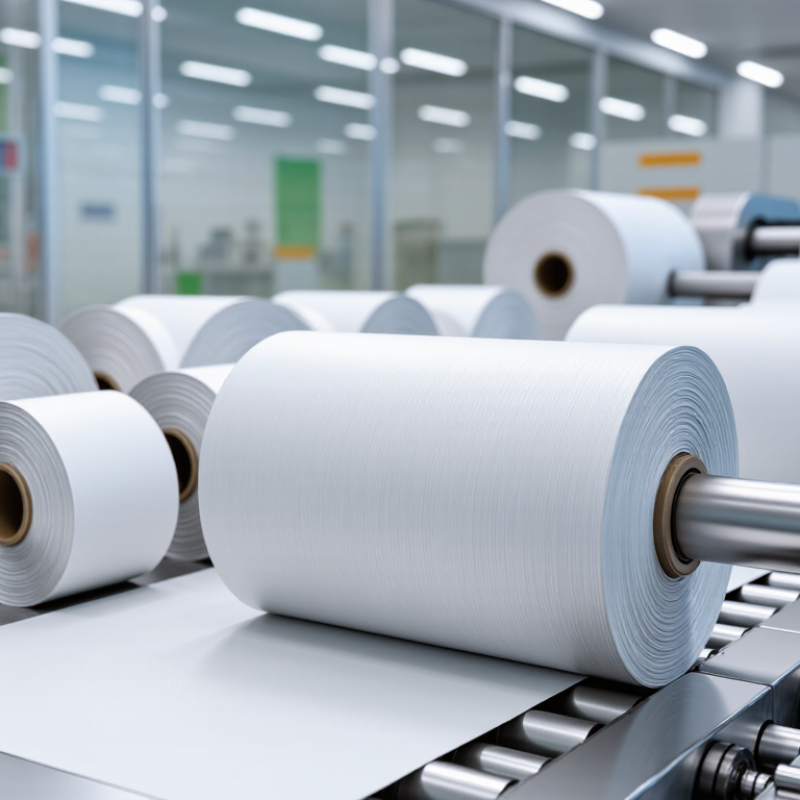
Spunlace nonwoven fabric is made by entangling fibers with high-pressure water jets. It uses no traditional weaving or knitting. The web may contain polyester, viscose, cotton, wood pulp, or blended fibers. Viscose adds absorbency and a soft hand. Polyester improves strength and dimensional stability. Cotton can create a more natural touch, but it may increase cost and variability.
The 30–250 gsm range supports many sourcing needs. Lightweight grades suit wipes, facial sheets, and breathable covers. Heavier grades work better for cleaning cloths, medical drapes, and durable industrial applications. Grand View Research reported that the global nonwoven fabrics market reached USD 53.51 billion in 2022, with a projected 7.8% CAGR from 2023 to 2030. Smithers also identifies hygiene, filtration, and healthcare as important demand areas in its global nonwovens outlook. These figures support spunlace’s commercial relevance, but they do not replace product testing. Not every 60 gsm material performs alike. Fiber length, jet pressure, bonding energy, moisture level, and finishing chemistry can change tear strength and lint release. I have seen specifications look perfect on paper, then fail during wet handling. Ask for basis-weight tolerance, tensile data, absorbency results, and wash performance. A technical data sheet is useful. It is not proof by itself. Sampling remains necessary.
Spunlace nonwoven fabric is produced by entangling fibers with high-pressure water jets, creating a soft, flexible, and absorbent structure without traditional weaving or knitting. Common fibers include viscose, polyester, cotton, wood pulp, and blended fibers. Lower basis weights are generally used for lightweight wipes and hygiene materials, while higher basis weights support cleaning cloths, medical products, filtration media, and durable technical applications.
The chart presents representative commercial basis-weight points within the widely used 30–250 gsm range. Actual specifications vary according to fiber type, blend ratio, bonding intensity, and end-use requirements.
Spunlace nonwoven fabric begins as a loose web of short or continuous fibers. Hydroentanglement uses fine, high-pressure water jets to rearrange and interlock those fibers. The jets move through the web from multiple directions. Mechanical entanglement then creates a stable, flexible sheet. No binder is added. This structure can feel soft while remaining durable during cutting, folding, and repeated handling.
Fiber selection strongly affects performance. Cotton and viscose can improve absorbency and skin comfort. Polyester can add strength, dimensional stability, and faster drying. The final blend depends on the intended application. Water pressure, nozzle spacing, web weight, and production speed must remain carefully balanced. Too much energy may damage delicate fibers. Too little may leave weak areas. That balance matters.
For global sourcing, I would request technical data before comparing prices. Check basis weight, tensile strength, elongation, absorbency, lint level, and wet performance. Production samples should be tested under realistic conditions, not only inspected by touch. A soft fabric may lose strength when wet. That is an easy mistake. Hydroentanglement is reliable, but it is not flawless. Small variations can appear across rolls or production batches. Experienced suppliers should document process controls and disclose limitations clearly. Such transparency supports more dependable purchasing decisions.
| Sourcing Dimension | Typical Data or Range | How Hydroentanglement Supports Performance | Global Purchasing Relevance |
|---|---|---|---|
| Manufacturing Principle | High-pressure water jets entangle fibers mechanically; no adhesive binder is required for standard constructions. | The jets rearrange and interlock fibers throughout the web, forming a cohesive sheet with a soft hand. | Helps buyers specify a clean, binder-free material for hygiene, medical, filtration, and wiping applications. |
| Common Basis Weight | Approximately 20–200 g/m², with many wipes and hygiene products using roughly 35–80 g/m². | Web density and fiber entanglement can be adjusted to balance thickness, strength, softness, and liquid handling. | A defined basis-weight tolerance supports accurate roll calculations, packaging design, and landed-cost estimates. |
| Fiber Options | Viscose, lyocell, cotton, polyester, polypropylene, and blended fiber webs are commonly used. | Hydroentanglement can process natural, regenerated, and synthetic fibers when fiber length and web formation are suitably controlled. | Fiber selection allows sourcing teams to align softness, durability, absorbency, cost, and end-of-life requirements. |
| Dry Tensile Strength | Typical values vary widely, often about 10–80 N per 50 mm, depending on basis weight, fiber type, and machine direction. | Repeated water-jet impact creates mechanical fiber entanglement, improving web integrity without a resin binder. | Buyers should request both machine-direction and cross-direction test results because fabric anisotropy affects converting performance. |
| Wet Strength Retention | Many durable grades retain approximately 50–90% of dry tensile strength when wet, depending on composition and construction. | Mechanical interlocking remains effective after wetting, unlike some webs that depend heavily on water-sensitive additives. | Important for wet wipes, industrial cleaning, medical drapes, and other products exposed to liquids during use. |
| Absorbency and Liquid Handling | Absorption capacity can range from approximately 2–10 g of liquid per gram of fabric, depending on fiber composition and porosity. | An open, interconnected pore structure supports liquid uptake and distribution; hydrophilic fibers generally increase absorbency. | Specification should include absorbency capacity, rate of absorption, and liquid retention rather than basis weight alone. |
| Softness and Skin Contact | Softness depends on fiber fineness, blend ratio, surface pattern, finishing, and basis weight; no single universal value applies. | Water entanglement avoids the stiff feel that can result from excessive adhesive binder and produces a flexible textile-like surface. | For personal-care and medical uses, purchasers should request skin-contact, odor, lint, and chemical-residue documentation. |
| Thickness and Bulk | Common thickness is approximately 0.15–1.50 mm, depending on basis weight, fiber crimp, and calendering. | Web formation and post-treatment can control loft, drape, cushioning, and packing volume. | Thickness tolerances affect roll diameter, carton quantity, converting settings, and freight utilization. |
| Lint and Particle Release | Low-lint grades are available, but lint performance must be verified through a defined test method and use condition. | Strong fiber entanglement reduces loose-fiber shedding compared with poorly bonded or weakly consolidated webs. | Relevant for cleanroom wiping, electronics, healthcare, and precision manufacturing supply chains. |
| Perforation and Converting | Roll widths, sheet sizes, perforation pitch, embossing, and folding formats can be customized for downstream equipment. | Uniform web consolidation supports clean cutting, controlled tear propagation, and stable high-speed converting. | Clear tolerance agreements reduce waste, machine stoppages, and variation between production lots. |
| Environmental Profile | Binder-free construction can reduce reliance on synthetic adhesives; biodegradability depends on fiber composition and any added treatments. | Mechanical bonding provides fabric integrity without a separate polymer binder, while water and energy use must still be assessed. | Request fiber-origin information, recycled content evidence, wastewater controls, and relevant lifecycle documentation. |
| Quality-Control Documents | Typical documents include technical data sheets, lot test reports, safety data, fiber declarations, and certificate-of-analysis records. | Process consistency is monitored through basis weight, thickness, tensile strength, moisture, absorbency, and visual inspection. | A documented specification and retained samples make multi-country qualification and incoming inspection more reliable. |
When sourcing spunlace nonwoven fabric globally, performance starts with measurable data, not attractive samples. GSM indicates mass per square meter and often affects softness, coverage, and liquid capacity. A 45 GSM sheet may feel light, while a 70 GSM sheet can offer a denser hand feel. Yet GSM alone proves little. Fiber blend, bonding method, and finishing can change performance at the same weight.
Tensile strength should be checked in both machine and cross directions. A wipe that survives pulling from a dispenser may still split across its width. Ask for test results, sample conditioning, test direction, and elongation values. In my sourcing experience, inconsistent edges sometimes revealed weak bonding before laboratory failure appeared. That observation is useful, but not enough. Repeated tests matter. Specify the required load for wet and dry use, because moisture can reduce strength.
Absorbency needs practical measurement. Check absorption capacity, absorption rate, and retention after squeezing. A fabric that absorbs quickly but releases liquid immediately may frustrate users. Test it with the intended lotion, water, or cleaning solution, not water alone. This is where sourcing teams often oversimplify. I have done that too. A balanced specification can include GSM tolerance, minimum tensile strength, absorbency time, and batch inspection frequency. Production conditions can shift results between lots.
Global buyers compare wood pulp, polyester, viscose, and blended grades against the final application. Wood-pulp fibers offer strong absorbency and a soft hand feel. Polyester provides tensile strength, quick drying, and better dimensional stability. Viscose adds softness and liquid uptake because it is regenerated cellulose. Blended grades can balance these properties. No fiber wins every trial.
Textile Exchange’s Materials Market Report 2024 estimates global fiber production reached 124 million tonnes in 2023.
Polyester represented about 57% of that volume, supporting broad availability and competitive sourcing. The same report expects total production to approach 160 million tonnes by 2030. Availability matters during international purchasing. Yet volume does not equal suitability. A polyester-heavy wipe may feel too harsh. A high-cellulose grade may tear when saturated.
FAO’s Global Forest Products Facts and Figures 2023 places global wood-pulp production above 190 million tonnes in 2022. This supports dependable pulp supply, but buyers still need fiber-traceability documents and consistent moisture control.
Smithers’ global nonwovens analysis identifies wipes, hygiene, medical, and filtration as important spunlace applications. Procurement teams should test basis weight, wet tensile strength, lint, absorbency, and drying time.
Test the finished product, not only the fiber label. The comparison is rarely perfect. A lower-cost blend may create higher converting losses, especially on fast production lines.
Spunlace nonwoven fabric offers a practical balance of softness, strength, and scalable production for global sourcing. Its hydroentangled fibers create a textile-like surface without weaving. In supplier evaluations, ISO 9073 testing gives measurable evidence. Test basis weight, thickness, tensile strength, tear resistance, absorbency, and air permeability. These figures help compare samples with production lots. They also reveal weak points before containers leave the factory. Test results are useful, but not perfect.
Chemical safety needs separate attention. OEKO-TEX® Standard 100 evaluates finished products against harmful-substance limits. Requirements vary by product class and intended contact. The 2024 Textile Exchange Materials Market Report estimated global fiber production at 124 million tonnes in 2023. Recycled polyester represented about 14% of total output. This growth increases the need for traceable inputs and consistent declarations. A certificate alone cannot replace batch-level verification. That is an uncomfortable, but important, sourcing lesson.
Tips: Request recent ISO 9073 reports, certificate scope, and sample-matching records. Ask for monthly capacity, lead times, minimum order quantities, and backup production lines. Check whether laboratory samples match commercial rolls. Review color, moisture, width, and tensile variation across several lots. Keep a retained reference sample. Supply capacity sounds reassuring until peak-season orders arrive. Use production records, not promises.
Copyright © 2021 Payless Pet Products - All Rights Reserved.