Fertilizer Granulation turns fine powders and nutrient mixtures into solid particles that are easier to handle, store, and spread. A useful paraphrase of the process principles covered in fertilizer technologist James T. Hignett’s work is: “Good granules must hold together, flow well, and deliver nutrients consistently.” This is a summary, not a verified verbatim quotation.
The difference is visible on the factory floor. Uniform granules move more predictably through conveyors and spreaders, while dusty fines can drift, separate, or collect in corners. Granule size and strength also affect storage: weak particles may crumble under pressure, and uneven particles can separate during transport. That matters in the field. A spreader calibrated for consistent particles is less likely to leave one strip pale and the next overly green.
Granulation is not magic. Feed moisture, binder choice, temperature, and equipment settings all shape the final product. A small process change can alter particle strength or size distribution. Operators therefore check samples, adjust settings, and record results. Even careful control cannot erase every variation in raw materials. That deserves attention, not glossing over. Understanding why granulation matters helps producers choose suitable processes and helps growers assess product handling and application. The goal is practical: durable, consistent granules that reach the field with less dust and more predictable spreading.
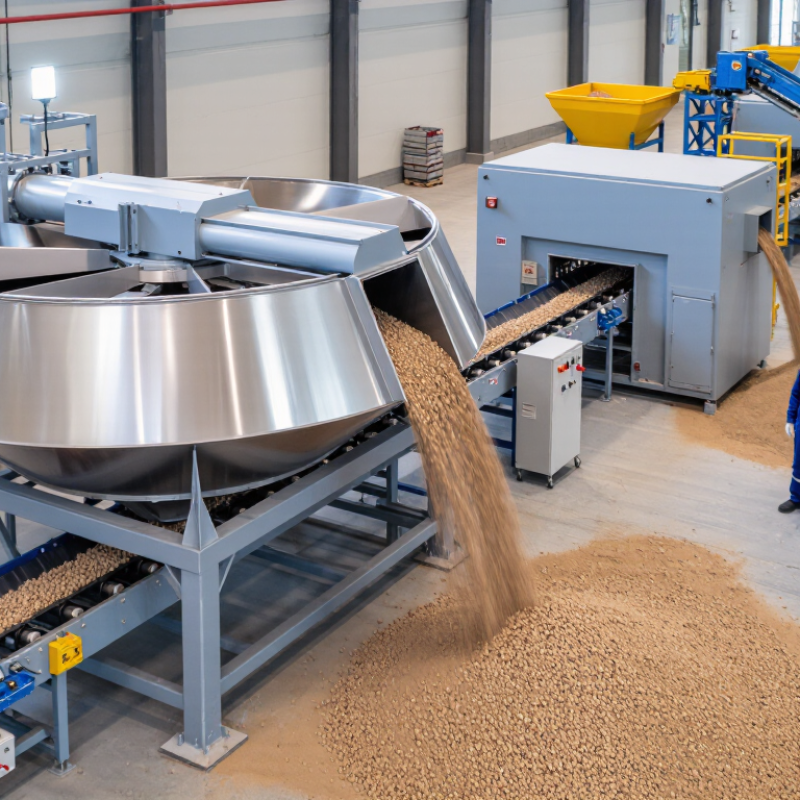
Fertilizer granulation turns fine powders or small particles into larger, more uniform granules. These granules are easier to handle, store, and spread than dusty material. The process usually begins with a blend of nutrient ingredients. In wet granulation, a measured amount of water or binder helps particles stick together. A rotating drum or pan tumbles the material, forming small nuclei that grow as more particles attach. Heat then dries the granules. Dry compaction uses pressure instead, forming sheets or flakes that are crushed and screened. The right method depends on the ingredients and their moisture sensitivity.
Granule size and strength depend on several linked conditions, including moisture, rotation speed, and residence time. Too little moisture may leave weak particles; too much can create sticky lumps. It is a balancing act. Operators often check samples for size distribution, crushing strength, and dust. Oversized and undersized material can be screened out and returned for further processing, though repeated recycling may change the mix. Granulation does not make every fertilizer identical or automatically improve nutrient performance. It changes the physical form, and the finished product still needs testing for its intended handling and application conditions. Sometimes the process needs adjustment. A small change in feed moisture can alter the texture noticeably.
Granulation gives fertilizer a more consistent particle size, making it easier to move through conveyors, hoppers, and bagging lines. Fine powders can cling to equipment or create dust during transfer. Granules generally flow more evenly, helping operators maintain a steadier feed rate and reduce cleanup around loading points. Less mess matters.
More uniform granules can also reduce separation during storage and transport. When particles differ greatly in size or density, they may settle unevenly in a silo or shift inside a bag. A controlled granule size can help keep the blend more consistent. The effect depends on the formulation and handling, though. Granules may still break if they are soft or repeatedly dropped.
Storage conditions still matter. Keep fertilizer dry, use clean bins, and avoid excessive stacking pressure when product guidance recommends it. Check for caking, fines, or changes in flow before a long run. Granulation is not a perfect fix; humidity can still turn a tidy pile into stubborn clumps. Flow can improve, but operators should assess the actual material rather than assume every granule behaves the same.
Why Is Fertilizer Granulation Important?
How Granule Size and Strength Affect Application
Granule size and strength help determine whether fertilizer reaches the intended area evenly. In a spinner spreader, particles of different sizes can travel different distances. Larger granules often carry farther, while fines may fall close to the machine or become airborne. That can leave visible stripes across a field. Small detail, big effect. A consistent size range helps reduce separation during storage, transport, and spreading. The ideal range still depends on spreader design and working width.
Strength matters after granules leave production, too. Weak granules can crack in bags, conveyors, or hoppers, creating dust and fines before application. This can affect flow and lead to uneven delivery. Stronger granules generally handle transport better, but hardness alone does not guarantee good spreading; shape, moisture, and internal structure also play a part. Inspect material after typical handling, not only as a fresh sample. Then calibrate the spreader for the intended speed and width, and check the pattern with collection trays if available. A neat-looking granule does not always mean a perfect field result. Weather and machine setup still intervene.
| Granule characteristic | Practical reference | Effect on application | What to check |
|---|---|---|---|
| Granule size | Many granular fertilizers intended for broadcast application use particles in roughly the 2–4 mm range. The suitable range depends on the product and applicator. | Consistent granule size helps fertilizer travel and spread more evenly. Size differences can cause particles to travel different distances from a spreader. | Check the product’s stated size range and confirm it suits the spreader’s recommended settings. |
| Size distribution | A product with a narrower size distribution has fewer unusually small or large particles than one with a broad distribution. | A broad distribution can contribute to uneven spreading because smaller and larger granules may follow different trajectories or separate during handling. | Review a sieve analysis or particle-size distribution specification where available. |
| Fine particles and dust | Particles substantially below the product’s target size, including dust, are generally undesirable in broadcast blends. | Fines can become airborne, increase dust during loading and spreading, and contribute to inconsistent placement. | Look for excessive dust or fines in the bag, hopper, or product specification; minimize rough handling. |
| Oversized granules | Granules larger than the intended product range may not spread like the main portion of the product. | Oversized particles can be distributed farther or unevenly, depending on the spreader, settings, and operating conditions. | Check for oversize material and calibrate the spreader using the actual fertilizer being applied. |
| Granule strength | Strength is commonly assessed by measuring the force needed to crush an individual granule. Results depend on the test method and granule size. | Granules with adequate strength are less likely to break into fines during transport, storage, and application. Excessively weak granules can increase dust and alter the size distribution. | Use the supplier’s crush-strength data only alongside its stated test method; handle and store fertilizer to limit breakage. |
| Moisture and storage condition | Moisture exposure can make some fertilizers cake or form lumps; susceptibility varies by fertilizer type and formulation. | Caking and lumps interfere with consistent flow through application equipment and may cause uneven distribution. | Store fertilizer dry, keep packaging closed when practical, and break up or screen lumps only as appropriate for the product and equipment. |
| Blended fertilizer compatibility | Components in a physical blend should have compatible particle sizes and handling characteristics. | Differences in size, density, or shape can encourage segregation during transport and handling, so the applied nutrient ratio may vary across the field. | Check blend compatibility and avoid unnecessary handling; use a well-calibrated spreader and follow product guidance. |
| Note: The size range shown is a general reference, not a universal specification. Spreading performance also depends on fertilizer properties, spreader design, working width, settings, and operating conditions. Follow the product label and applicator instructions. | |||
Fertilizer granulation influences how nutrients reach crops, starting with how evenly product spreads. Uniform granules flow through a spreader more consistently than fine powder, helping reduce dusty patches and uneven application. Small details matter. Granule size and hardness also affect handling and how quickly particles break down after wetting. However, granulation alone does not determine nutrient release. Soluble nutrients may dissolve quickly, while coatings or less-soluble nutrient forms can slow availability. Soil moisture, temperature, and rainfall all change the pace.
After application, water moves nutrients from each granule into the surrounding soil. A light rain may dissolve the surface, while dry soil can leave granules visibly intact. Nutrients then move differently: nitrogen forms can travel with water, while phosphorus usually stays closer to where it dissolves. Placement, root growth, and crop stage influence whether plants can use them. A field check can help: look for an even spread, then compare soil moisture and crop growth across the treated area. Even a well-made granule cannot fix poor timing or an unsuitable rate. It is tempting to expect a neat granule to feed every plant evenly, but real fields are less tidy.
How granulation supports nutrient distribution and crop use
Typical fertilizer grades show the percentage by weight of nitrogen (N), phosphate (P₂O₅), and potash (K₂O). Granules make products easier to handle and can help spread nutrients more evenly across a field. Granulation alone does not determine nutrient-release speed: that depends on nutrient chemistry, granule size or coating, soil moisture, and other soil conditions. Actual grades can vary by product.
Fertilizer granule quality depends on more than appearance. Uniform size helps spread nutrients evenly, while excessive fines or oversized pieces can create uneven application. A sieve test offers a quick check. It is useful, but incomplete. Granules should also resist breakage during conveying, bagging, and transport.
Strength must suit the product’s use. Granules that crumble easily create dust; those made too hard may dissolve more slowly than intended. Raw material size, binder levels, moisture, and mixing time all affect this balance. Drying matters, too. If granules leave the dryer damp, they may stick together in storage. If they are overdried, some formulations can become brittle.
Process consistency shapes the final batch. Operators can monitor moisture, granule size, and dryer conditions, then compare samples from different points in production. A single attractive sample can be misleading. I would also check how the product behaves after handling, not just when it first comes off the line. Small process changes may shift the results, and the ideal balance can vary by formulation and spreading equipment.
Copyright © 2021 Payless Pet Products - All Rights Reserved.