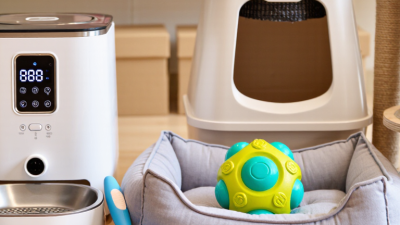
Global pet care is changing quickly, and China’s New Pet Products are attracting buyers seeking useful design, reliable quality, and competitive manufacturing. Yet novelty alone is not enough. A smart feeder must dispense consistent portions; a travel carrier must feel secure and remain easy to clean.
The American Pet Products Association’s 2024 State of the Industry Report estimated U.S. pet-industry spending at $147 billion in 2023, with $150.6 billion projected for 2024. These are U.S. figures, not a measure of global demand or Chinese exports. Still, they show the scale of consumer spending behind categories such as feeding, enrichment, grooming, and travel. Buyers should verify product claims, materials, testing records, and after-sales support rather than rely on attractive catalog photos.
Design matters. So does evidence.
Veterinarian Dr. Marty Becker, founder of Fear Free, uses the phrase “Taking the pet out of pet care” to describe a more considerate approach to animal care. That principle offers a useful lens for evaluating new launches: does the product reduce stress, improve daily routines, or simply add another feature? A colorful lick mat, a quiet grooming tool, or a well-fitted harness may solve a real problem. Some products will not. This guide explores promising Chinese launches while recognizing that supplier claims and market data can be incomplete. Careful sampling remains essential.
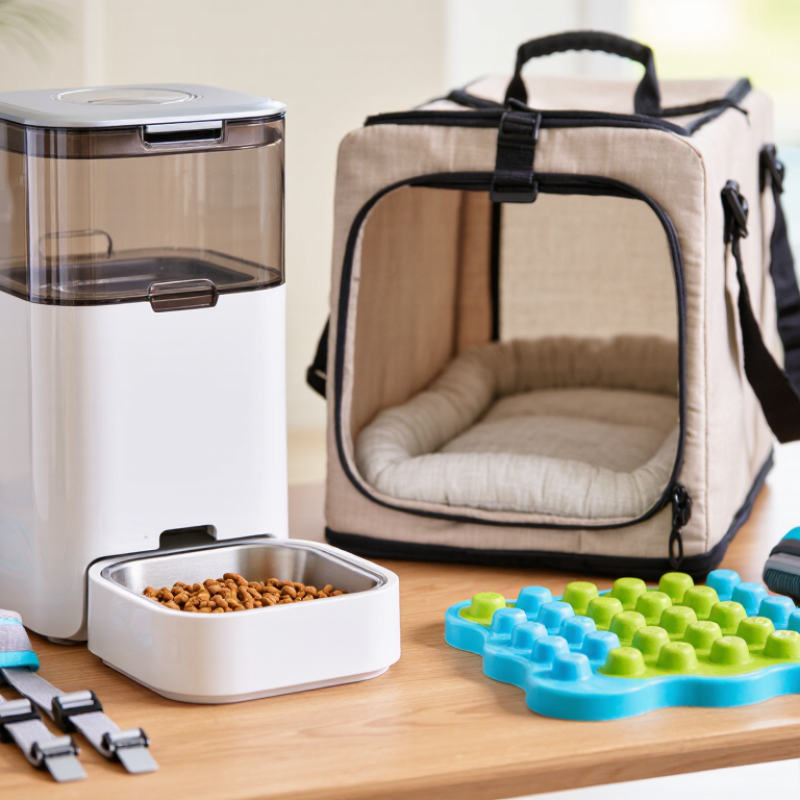
APPA reports that pets are present in 66% of U.S. households, a useful baseline for buyers assessing new pet products. The figure suggests broad household reach, not automatic demand for every feeder, carrier, or enrichment toy. Pet ownership alone does not show what people purchase, how often they replace it, or what fits their budgets. That gap matters.
Global buyers can use the statistic to ask sharper product questions. Will a raised bowl fit a small kitchen? Can a washable mat dry quickly after a muddy walk? Are toy seams sturdy enough for repeated use? These details shape everyday satisfaction more than a trend label might. It is easy to assume a large market means an easy sell. That assumption can be wrong.
For suppliers, the 66% figure is a starting point, not a sales forecast. Compare it with retailer feedback, product testing, and local household needs before placing large orders. Check whether instructions are clear, materials are easy to clean, and sizes suit the animals buyers actually serve. Small tests take time. Still, they can expose a weak clasp or confusing package before those problems reach more homes.
China’s newer pet-product ranges are moving beyond basic bowls and carriers. Smart feeders now commonly combine timed portions, app controls, and backup power options. Buyers should check portion accuracy with different kibble sizes, not just trust the display. A feeder that jams at breakfast is still a feeder that needs work.
Wearables add another layer, from activity tracking to location features. Review battery life, charging method, water resistance, and how clearly the device fits different pet sizes. Data quality can vary with placement and movement, so avoid treating every reading as a diagnosis. Small details matter.
Litter systems deserve close attention to cleaning access, odor control, noise, and the availability of replacement parts. Ask for operating videos and test a sample with the litter type your customers are likely to use.
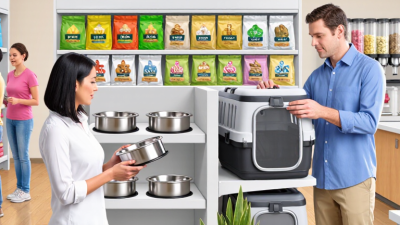
Travel gear completes the map: foldable bowls, ventilated carriers, and washable seat covers are practical options. Check seams, zippers, ventilation openings, and packed dimensions. One comparison chart rarely captures daily use well; I would revise it after handling actual samples. For global sourcing, request clear material specifications, electrical details where relevant, and consistent inspection records before placing a larger order.
U.S. pet industry spending reached $147 billion in 2023, according to the American Pet Products Association’s 2024 State of the Industry report. That total includes food, veterinary care, supplies, and services—not just toys and accessories. Food and treats accounted for $64.4 billion, while veterinary care and product sales reached $38.3 billion. The market is substantial. But a large category does not guarantee that any new product will sell.
The association’s 2023–2024 National Pet Owners Survey estimated that 86.9 million U.S. households owned a pet, roughly two-thirds of households. For global buyers sourcing from China, this broad base points toward practical, repeat-use designs. Consider washable beds that dry quickly, leak-resistant travel bowls, adjustable harnesses, and sealed kibble containers. Shelf details matter: even stitching, smooth zippers, and legible size labels can build buyer confidence. Small details. The figures are broad, and that is a limitation. I would not treat them as a forecast for any single product.
China Top New Pet Products for Global Buyers
China’s New Offerings: Automation, Sustainable Materials, and Portable Design
Chinese pet-product makers are combining automation with compact, travel-ready designs. Timed feeders with removable bowls, quiet grooming tools, and fold-flat carriers address everyday routines. Useful, when thoughtfully built. The International Federation of Robotics’ World Robotics 2024 report recorded 541,000 industrial robot installations worldwide in 2023. This reflects wider automation capacity, not demand for pet devices. Buyers should still check cleaning access, replacement parts, and moving components.
Material choices matter, too. Recycled fabrics, durable plastics, and minimal packaging can reduce waste, but labels alone prove little. PwC’s 2024 Voice of the Consumer Survey found respondents were willing to pay an average 9.7% more for sustainably produced or sourced goods. That signals potential interest, not a guarantee of sales. Ask suppliers for material details and evidence supporting environmental claims. A washable cover helps; a product that wears out quickly does not.
Portability should mean more than a smaller box. Look for secure latches, accessible controls, and parts that pack neatly without adding fragile extras. The American Pet Products Association’s 2025 State of the Industry report put U.S. pet-industry spending at $152 billion in 2024, with $157 billion projected for 2025. The figures show a large market, though not specific demand for any design feature. A clever app can also become one more thing to charge. Buyers may find simpler, repairable products more dependable on the road.
For global buyers sourcing new pet products from China, a reliable checklist begins with safety compliance. Request material declarations, relevant test reports, and clear product specifications before approving samples. Check small parts, seams, edges, coatings, and packaging. Requirements vary by destination and product type, so confirm them with qualified local advisers. A document alone is not proof of consistent production.
Quality control should cover both samples and finished batches. Agree on measurable criteria, such as dimensions, stitching strength, color tolerance, and acceptable defect rates. Ask how the supplier checks incoming materials and records inspection results. For example, a chew toy sample may look sound, while later batches use a softer seam. That detail is easy to miss. Factory photos help, but they cannot replace independent inspection when the order risk is high.
Tips: Compare MOQ with storage space and cash flow, not just unit price. Calculate samples, tooling, packaging, freight, duties, inspection, and likely rework. Get each cost in writing. A low quote can become expensive. Check assumptions twice; even a careful spreadsheet can miss one fee.
Buyer Checklist: Safety Compliance, Quality Control, MOQ, and Total Cost
How to read this chart: Counts show how many of four example products—leash, feeding bowl, textile bed, and electronic feeder—warrant buyer screening for each area. This is a planning guide, not a certification or legal determination. Confirm applicable rules for the product’s materials, design, destination market, and intended use. For supplier comparison, also agree on inspection criteria and sampling plans, request the MOQ by variant and packaging configuration, and compare total landed cost, including tooling, packaging, freight, duties, and testing.
Copyright © 2021 Payless Pet Products - All Rights Reserved.